Brothers M. Mondays in May is our tradition of sharing our excitement about our chickens every Monday in May.
As I said in the last post, more on wire rusts and wood rots. Ten years ago I built 2 chicken tractors and this year some of the chicken wire is rusted beyond protection and the rest is questionable. So to cut to the chase, 9 years is how long my chicken tractor lasted.
 One of the two tractors developed holes in the chicken wire late last year, I think from birds landing on it, so I knew I needed to replace some of the wire this year. What I didn’t know was that ants had destroyed the front board of that tractor. Here’ a picture of what I replaced at the 11th hour to get me through this year, one section of wire over the top, new front board, and new chicken wire on the front. The 2nd tractor didn’t have holes yet, so I just added some fencing over the same area I replaced on the first. That will get us through the growing season.
Most of the wood frame could probably go another year or two. There’s evidence that ants have started homes in the wood, but most of it still seems solid. Where I went wrong was that I added a board to the front of this chicken tractor because there was a big knot where we pull from. The ants crawled between the boards and got a foot hold. Also, I think the board I added may not have been treated. I probably meant to replace it and forgot.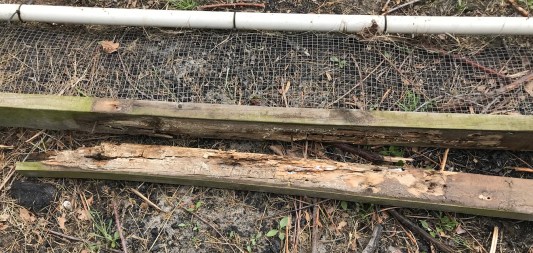
 Rust is the main factor in rebuilding the chicken tractors. All the chicken wire needs replace. Some would easily break off while the rest is getting there. Here’s a flattened pile of the wire. The top, is the worst place, but the sides are not too far behind. I think next time once it appears the wire may start rusting, I’ll treat it with some anti rust spray.
As I said, I’m not going to repair the old ones, it’s too much work just to get a couple more years. I’ll spray and re-use the cattle panels, re-use the old doors as they have already been replaced once and are easy to replace, but the rest will be new.
Here’s a picture of the back of the tractor so you can see how well the pallet planks held up. Really not bad considering the age.

Here’s a link to my ‘How to build a Chicken Tractor’ page.
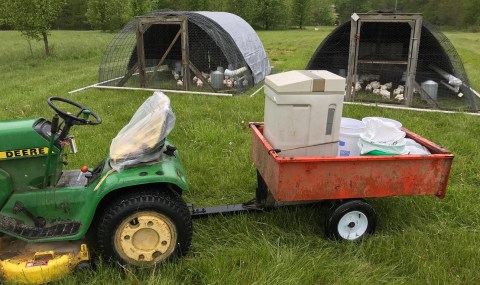

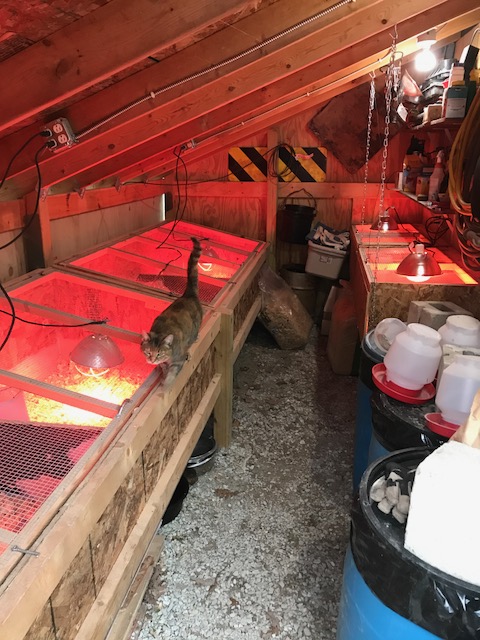
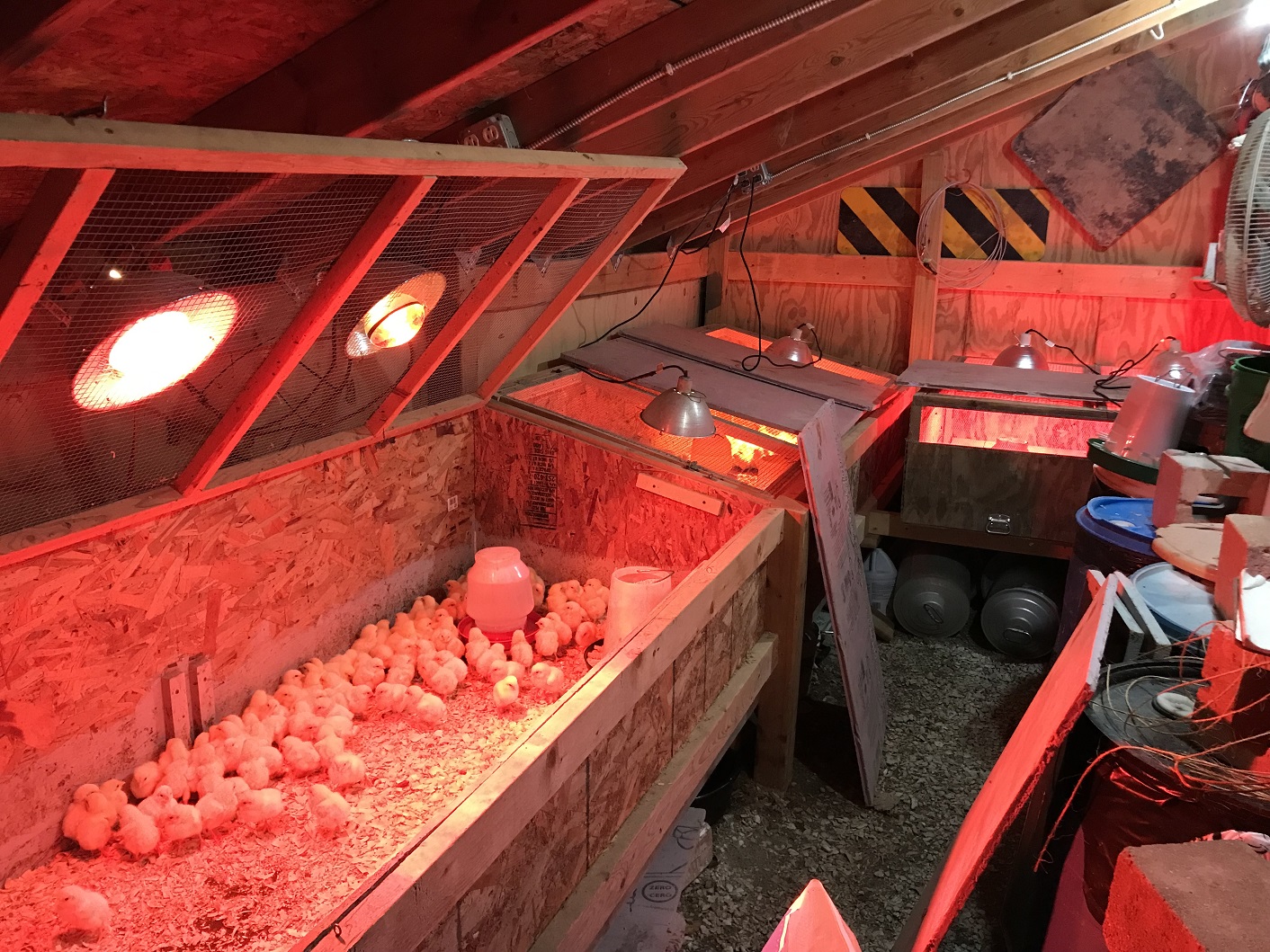
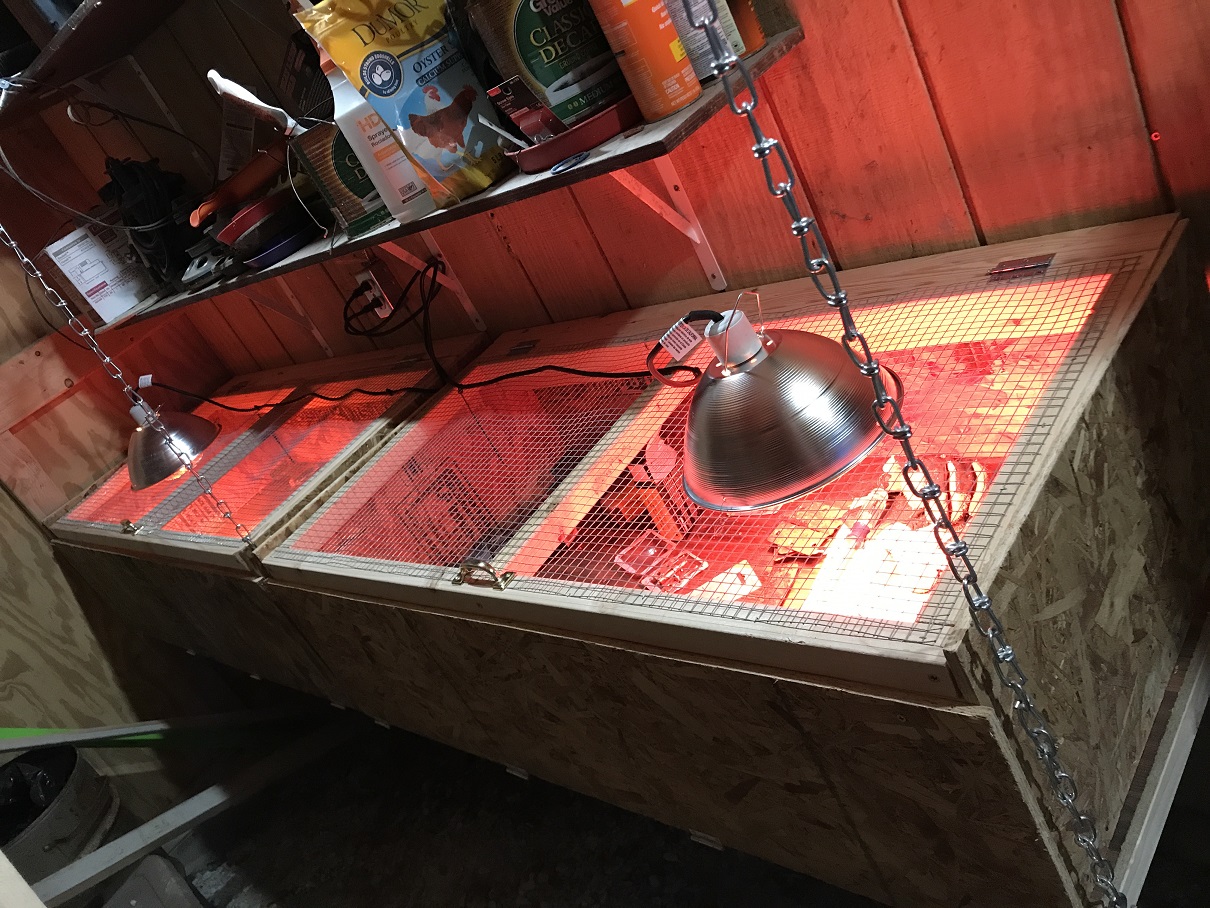 We still needed more brooder area, but I really didn’t want to dedicate more area to just brooders so I came up with the idea of fold up brooders that hang on the wall.
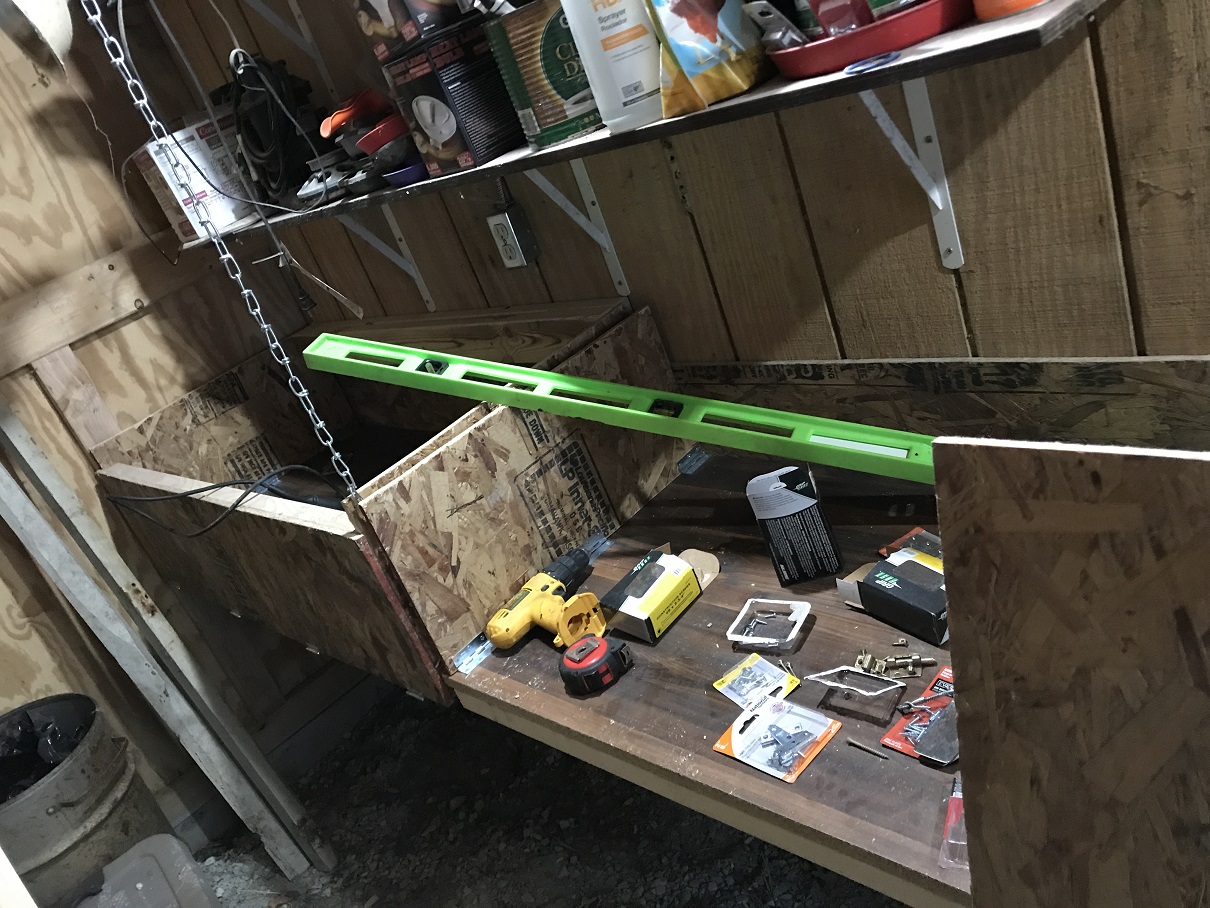 I made two 2’x4′ hinged brooder boxes. The bottom is hinged to the wall so it folds down, the two sides fold into the floor, and the front is hinged to Fold under the bottom. The lid had hinge pins so you could take it off and hang it on the folded down brooder or store it someplace else.
 To support the front of the folding brooder, I hung chains from the rafters with S hooks on either end to unhook from the brooder and remove from the rafter to store the chains away.
 So, I decided to take them out and make a 4×4 in the back corner. A family member made a similar brooder to this one and gave me the idea. The idea is that it’s 4’x4’x1′ so you can make it out of one 4×8 sheet. I made mine a bit taller and added a strip of wire mesh, this was to give me a little more height for waterers and feeders, and I thought I might make more and stack them for transporting the full grown grown chickens, the latter never really panned out.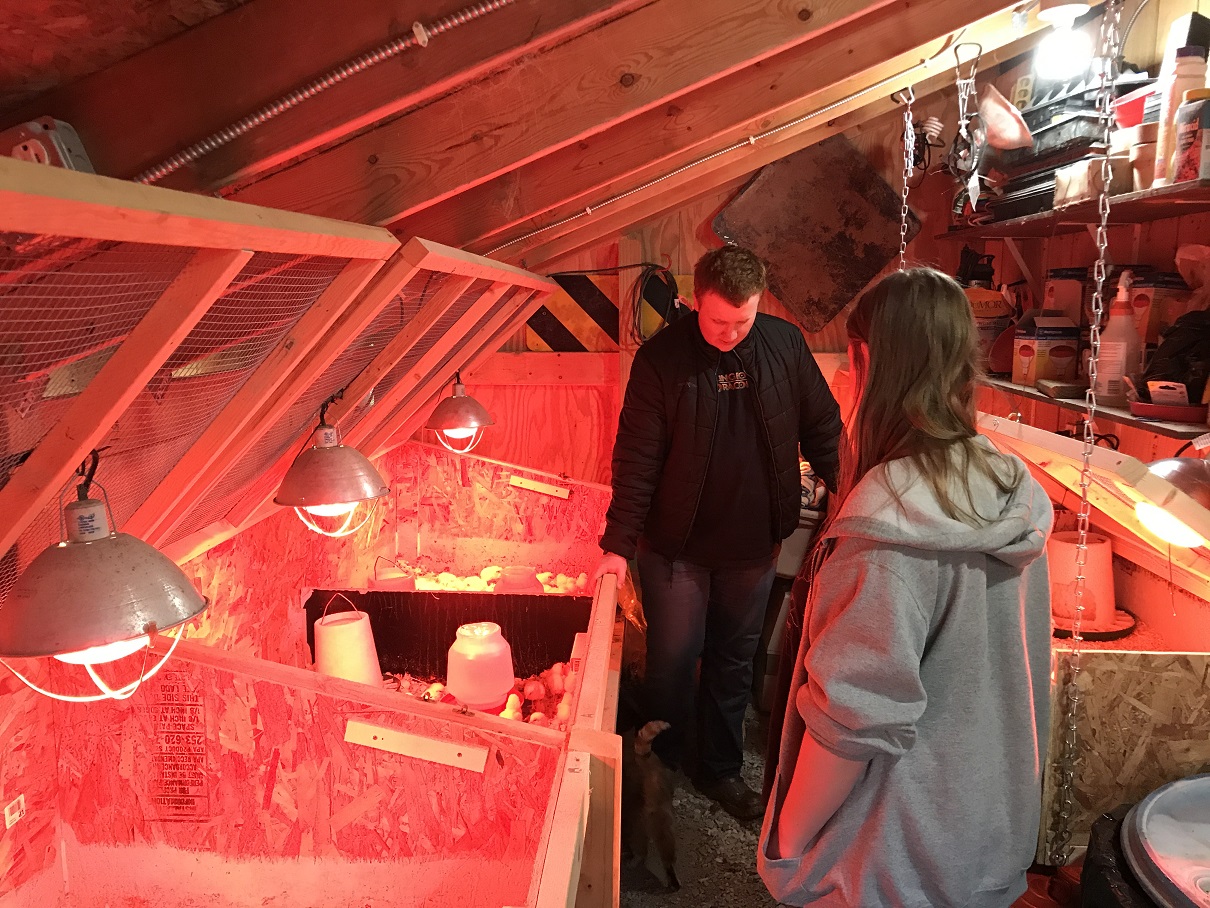

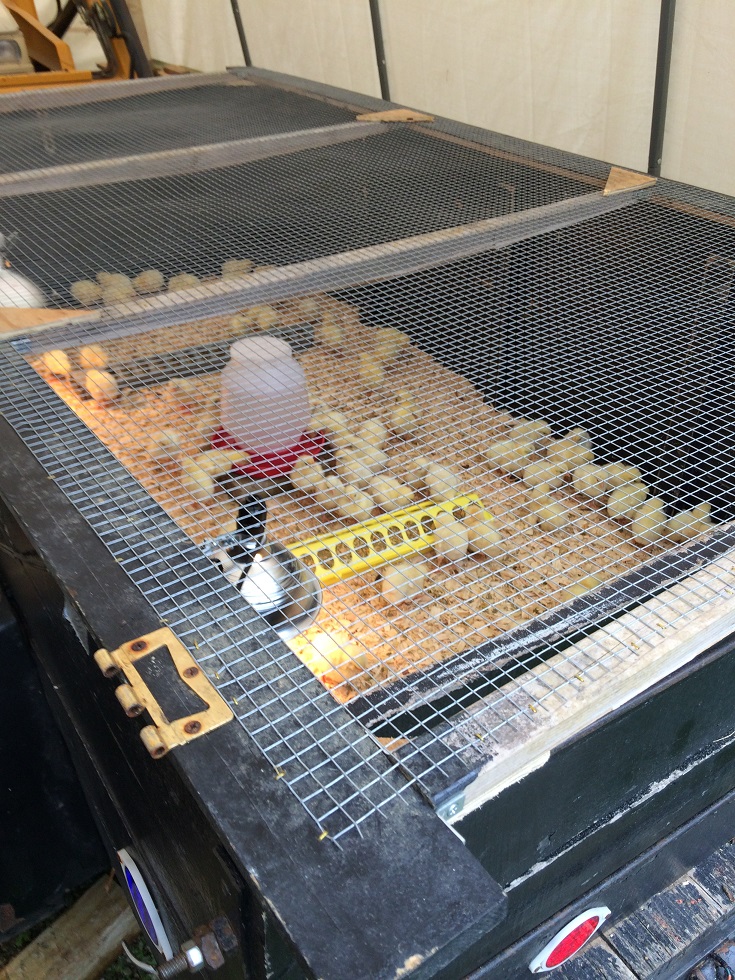
 Turns out I should have been more concerned about how secure the heat lamps were attached via the squeeze handle. One fell off and burned a hole in the floor of the trailer. Fortunately the conditions were right and it only smoldered a hold the size of a basketball instead of starting a fire. Unfortunately I cannot find my picture of the hold. After that I fastened the lights securely to the lid, which looked pretty ominous from outside the tent.
 The down side of the trailer was running off an extension cord, how deep the trailer was for reaching onto it, and we outgrew it once we started raising more than 100 birds at a time.
 Our very first brooder box was thrown together with a lamp and a plastic tote for 20 guinea fowl we bought. But for the meat chickens, I needed something better and bigger. I converted a pallet crate into a brooder. I enclosed the crate on the outside with 2×4 wire fence to keep predators from breaking in. I used some scrap composite wood flooring for the floor, I was a little short so there were a couple places I filled in with scrap wood. The crate didn’t have a top or lid, so I used a regular pallet with 2×4 fence attached for the top. It wasn’t attached, but was heavy enough critters couldn’t move it.
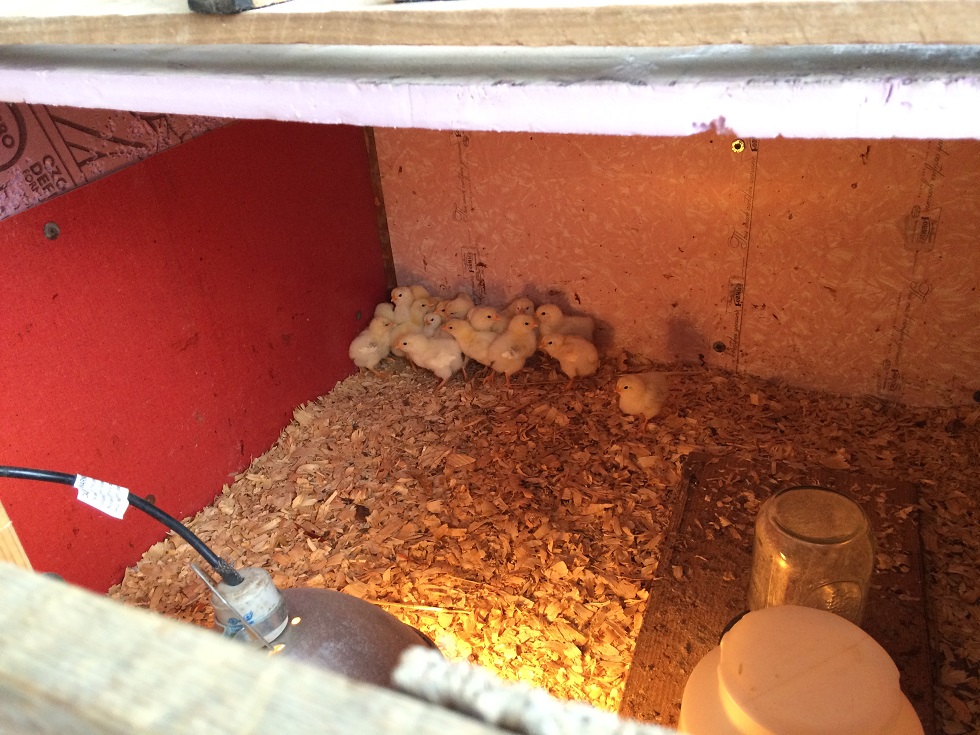 I lined the inside with pink 1/2″ foam board insulation. On the sides I attached some scrap Formica sheets to protect the foam board from being pecked and eaten, it didn’t protect all the way to the top, but that was only a problem when I temporarily hosed a grown bird in the brooder. I had a piece of foam board that covered almost the complete top, then I sat the pallet top/lid on to of that.
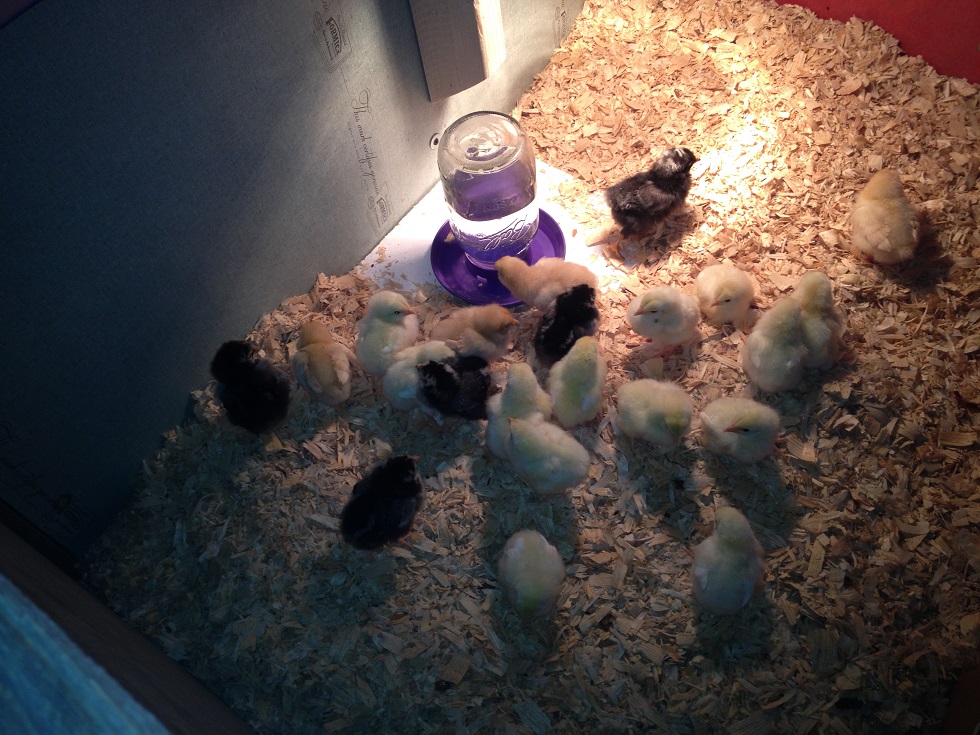 An attached light to the side and a waterer and feeder and it was ready for chickens. This worked pretty good. But we quickly outgrew it, I think the max was about 30-35 birds.
 Maples Miscellany