Brothers M. MiM ’24 – Did It work – Week3

Brothers M. Mondays in May(MiM) is our tradition of sharing our excitement about our chickens every Monday in May.  This year’s Monday’s in May focus on Did it Work? We’ll look at some of the things we’ve done and give an update on how well it worked.  This week is the portable coop floor.

For the portable chicken coop, I wanted an easy to clean floor.  I started out with a solid board with a laminate top so that I could easily scoop it clean.  This worked OK, but it was hard to get a shovel at the right angle to do a good scrape, it required cleaning often, and to really get a good clean I had to pull the board out, and it was heavy and unwieldy.
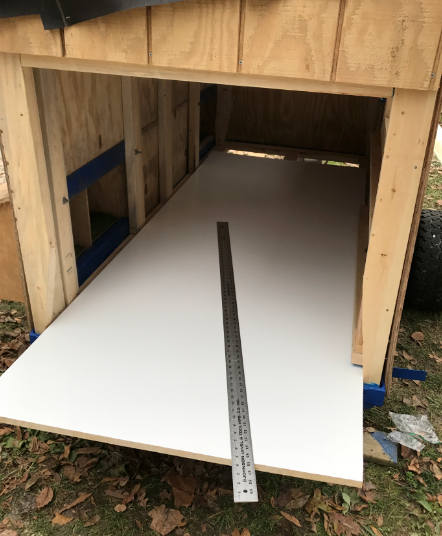
Floor

Then I went to a mesh flooring using 1x.5 inch wire, which I don’t have a picture of.  This didn’t work well at all, the .5″ was too small and droppings wouldn’t fall through.  And since stuff piled up, it wouldn’t clean easily by brushing with a push broom and needed cleaned by scraping with a shovel.  This one also had a 2×4 that went the length of the trailer that covered a support bar and 2×4 supports that spanned width.  These also caused droppings to quickly build up.  I did make some improvements by notching the frame where it was binding and cutting the width a little shorter so it slid in and out much easier.  Below is the next iteration, but you can see the center board and notch.

Floor1

Then I switched to a 1×1 mesh on the same frame and replaced the 2×4 that went the length of the trailer, pictured above.  I also replaced the 2x4s that spanned the frame with 2x2s.  This worked pretty good.  The chickens seemed to have no issues navigating the bigger mesh and more stuff fell through; however, the center bar that runs the length of the trailer, directly under the long 2×4 that I removed, would still get piled up quickly.   But mainly it was just the amount of poop a chicken does at night while on the roosting bars, which are over the long center bar, that caused problems keeping it clean.  Poop piled up and was quickly above the floor.  This floor was easier to clean with the broom, except for the areas where things backed up from below the wire mesh.  Then I had to pull it out and use a shovel to scrape it and clean off the center bar too.   Still not what I wanted.

Floor2

The current iteration happened by chance.  A piece of the wire mesh under the perches rusted and I didn’t want to deal with it in the winter time, so I threw a heavy board over it.  During the next couple cleanings, I realized that I might be on to something.  I cut a long narrow board that just sits under the perches; the heavy poop area.  Now, It works really well to pull the board out and scrape it off and the rest is usually easily cleaned by a push broom.  I added some straping to the end of the board on the bottom to give me an easier way to pull it out. I’ve been using this for a few months now and it’s looking like this will be the solution I stay with.
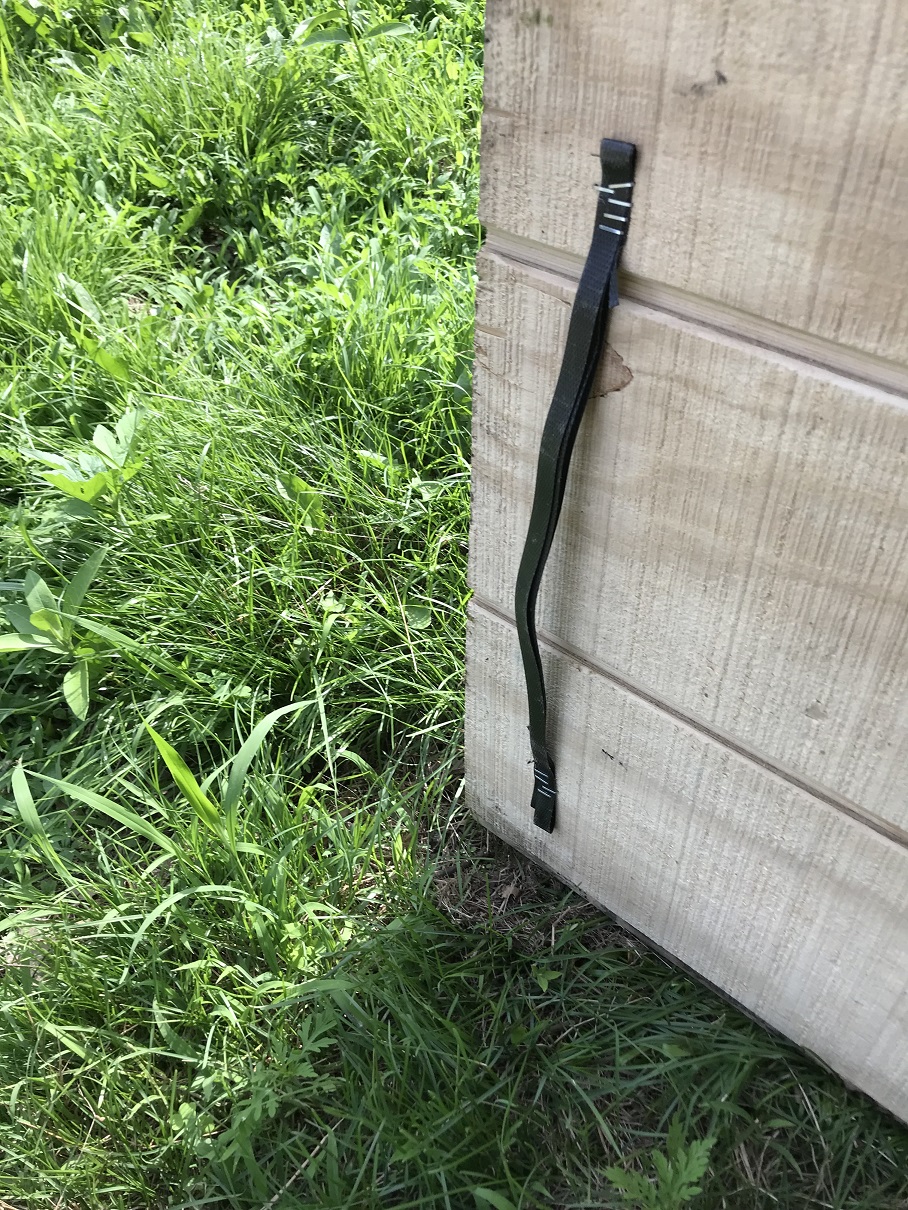
Floorstrap

Back to Portable Chicken Coop Main Page

Brothers M. MiM ’24 – Did It work – Week2

Brothers M. Mondays in May(MiM) is our tradition of sharing our excitement about our chickens every Monday in May.  This year’s Monday’s in May focus on Did it Work? We’ll look at some of the things we’ve done and give an update on how well it worked.

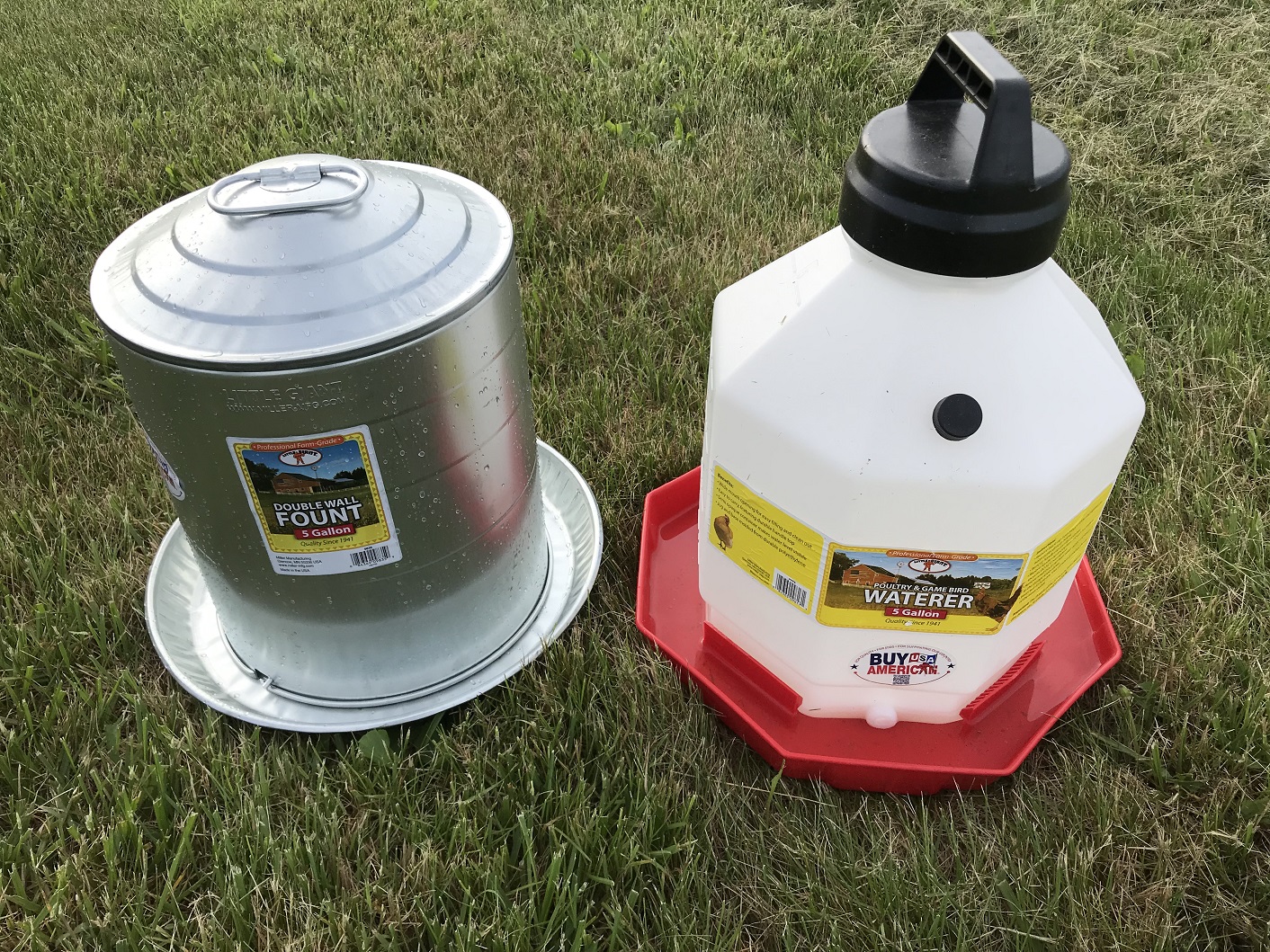
Today we’re again talking about waterers and it’s less of a ‘did it work’ and more of a ‘what works for us’.  I’ve been eyeballing the plastic 5 gallon waterers for a while now wondering if they’d work better for us.  Well this year I needed one and the only kind my favorite farm store had was plastic so I got a chance to try one out.

Waterers

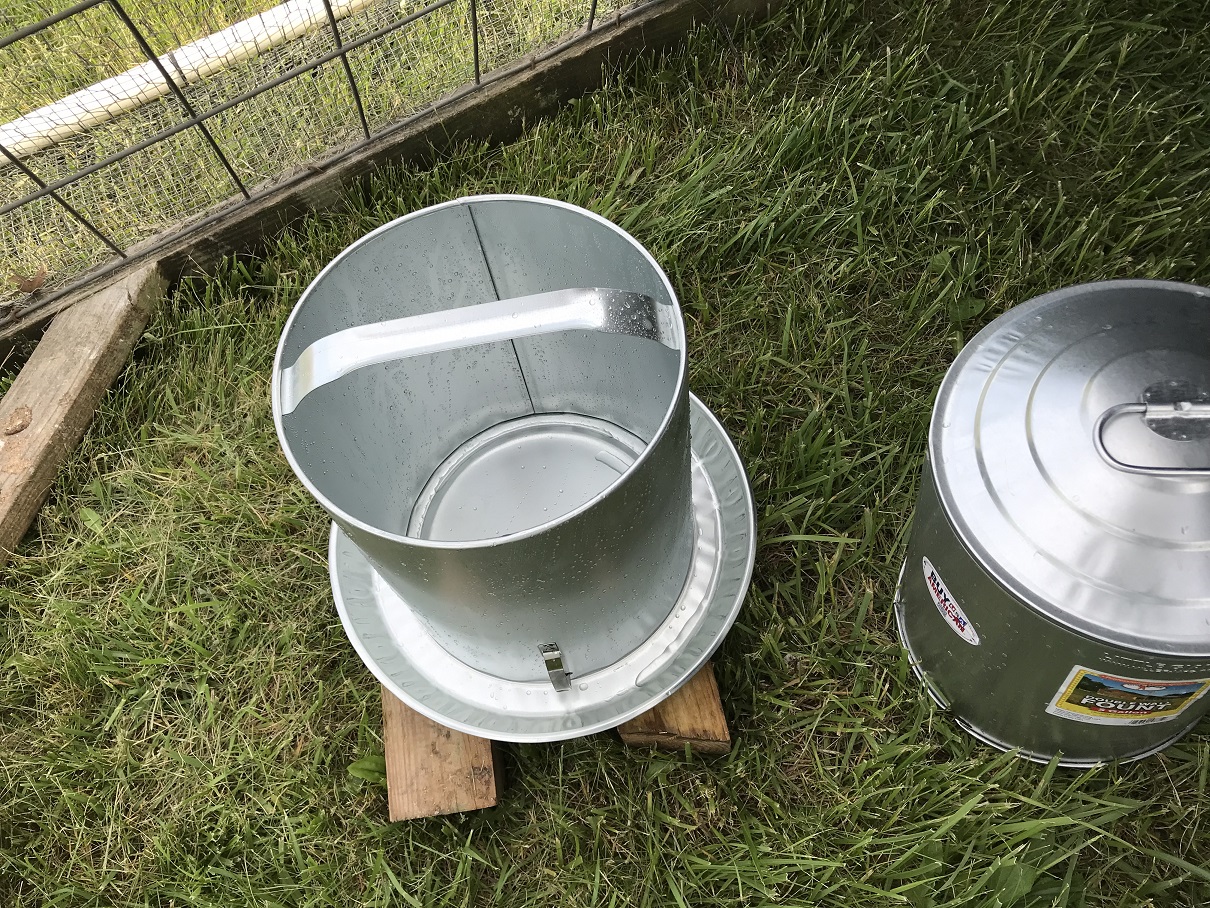
The metal dual wall waterers are traditional and well proven.  They are also super convenient to fill with a 5 gallon bucket because the opening is so large and all you have to do is pull the top cover off, I only twist and hook the tops when I’m carrying them empty so it’s easy to pull straight up when filling.  However, they are a bit harder to clean, I use a small kitchen brush to clean the trough.   They are also more cumbersome to carry when they have water as you have to take the top cover off and carry them by the sturdy inside handle.  They have a “plunger” that prevents water from flowing out, but some always seep out anyway and will overflow until you can replace the top cover.

Metal

The plastic waterer is easily carried by the handle on top and there’s a small cap that you place over the bottom hole to prevent water from coming out as you carry it or while you are filling it.  The bottom tray comes off, so it’s easier to clean too.  Filling the plastic waterer is more difficult as the lid/handle is hard to unscrew, at least for the first little bit.  The hole is not very wide and the flow of water from a 5 gallon bucket tends to be wider than the hole and harder to hit.  You also have to place the small cap over the hole to prevent losing water while filling, then return it to the top where there’s a convenient place to keep it.

Plastic

What made the decision easy for me happened the second evening.  I was relaxing in the house and started questioning if I had removed the black cap off the fill hole.  I went back out to the field only to confirm yes I had done it right.  SO…  I know how forgetful kids are, and this was just a recipe for disaster.  With the metal waterers,  I’ve never questioned whether myself or my kids put the covers back on the waterer.  A big metal cover is just too obvious and much harder to miss.

Brothers M. MiM ’24 – Did It work

Brothers M. Mondays in May(MiM) is our tradition of sharing our excitement about our chickens every Monday in May.  This year’s Monday’s in May focus on Did it Work? We’ll look at some of the things we’ve done and give an update on how well it worked.

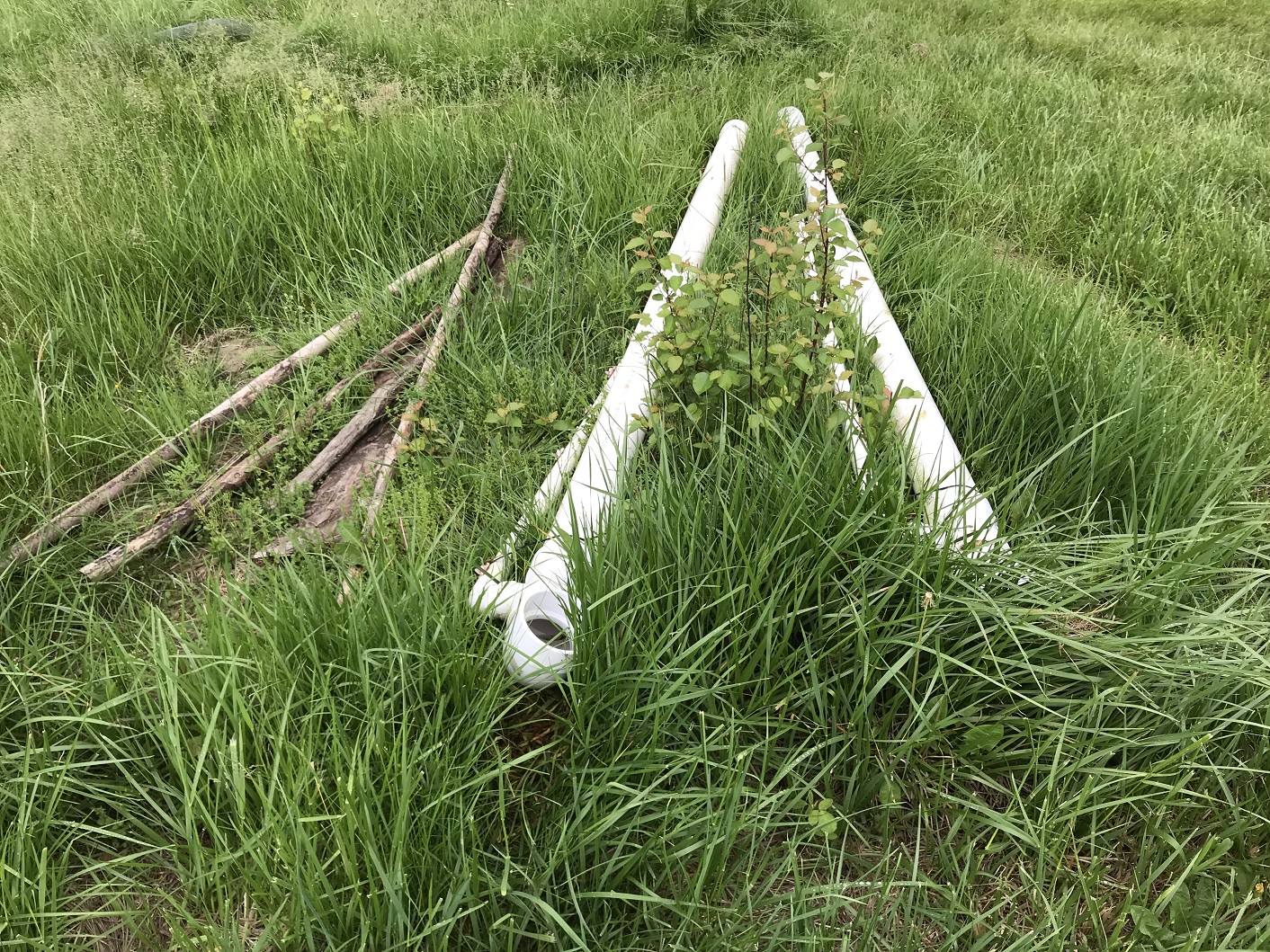
PVC Trash

This week we’re looking at the PVC nipple waterers. I created 2 PVC watering systems, one for the portable chicken coop and one for our Chicken tractors. As you can probably tell by the picture, one of these didn’t work too well.
PVC tractor
In the chicken tractor, I used a 10 foot length of 4 inch PVC with a shorter piece of 1 1/4 inch under it with nipples in it. This was attached to the side of the Chicken tractor for the chickens to drink from. The thought was that since it was attached to the tractor, we wouldn’t have to remove the waterer before moving the tractor.

We were able to train chickens to drink from it, but most still preferred the regular round waterer. The extra weight did make the chicken tractor heavier and a bit harder to move. Moving forward wasn’t too bad; however, without a cap on the open end of the pipe, moving backward just poured the water out when we raised the back of the chicken tractor with the dolly. Filling the water via the 4″ mouth hanging on the wall was also a pain. I scrapped them this year when I rebuilt 2 of the chicken tractors.
CoopPVC
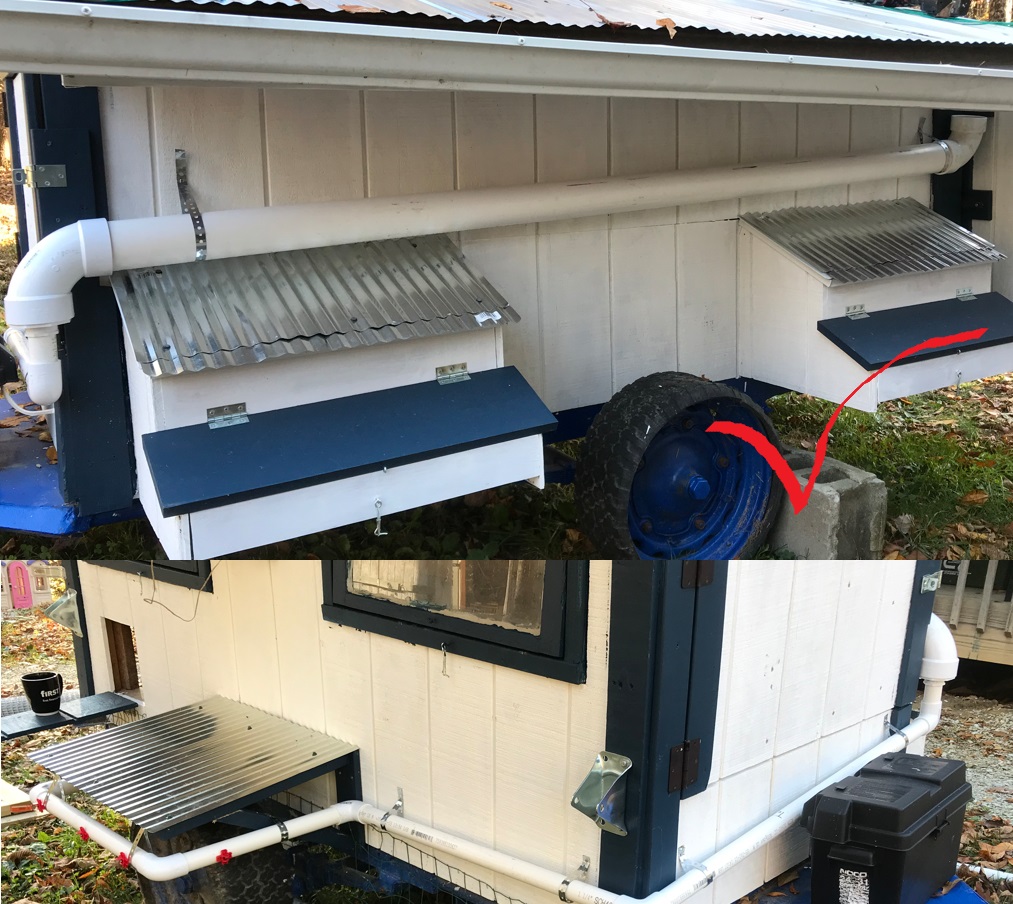
I also used an 8 foot length of 3 inch PVC to create a watering system on the portal chicken coop. It narrows down to a 1 1/4 pipe that goes under the side door and to a watering station around the wheel. I also added a 3 inch to 4 Inch elbow to the fill end to make it easier to fill the water.

This one works really well. I don’t raise the front of the coop high enough to allow the water to pour out and even if some did, I only move the coop once a week so it wouldn’t be a big problem. The main drawback of this is that the 3″ PVC doesn’t hold as much water as I’d like, and I should have put the fill farther out so it’s not under the roof. I think I’ll fix both of these with one of the 4″ PVC pipes from the chicken Tractor.

Brothers M. Mondays in May 2022 – Brooder Series Week 5

Brothers M. Monday is our way of sharing our excitement  about our chickens.

Folding1We still needed more brooder area, but I really didn’t want to dedicate more area to just brooders so I came up with the idea of fold up brooders that hang on the wall.
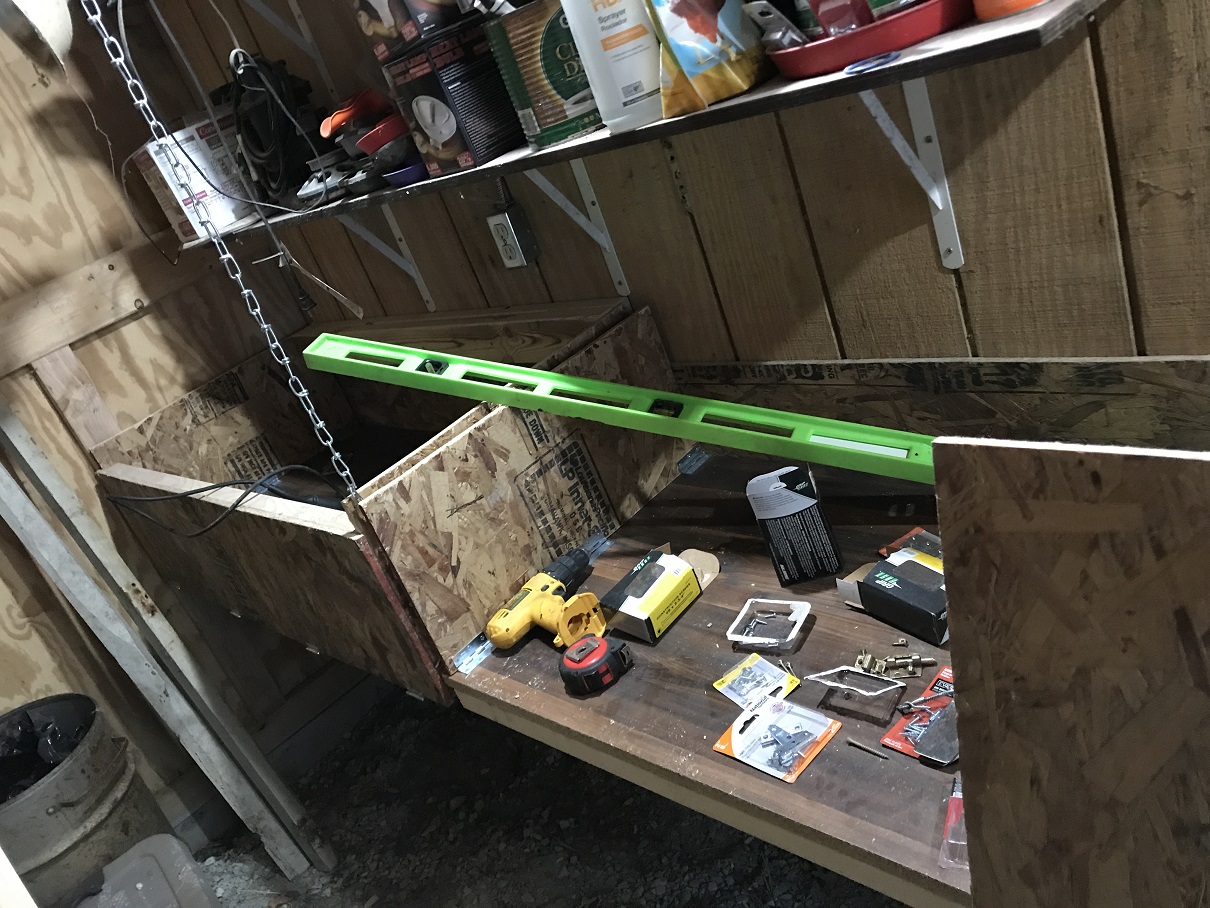
Folding2I made two 2’x4′  hinged brooder boxes. The bottom is hinged to the wall so it folds down, the two sides fold into the floor, and the front is hinged to Fold under the bottom.  The lid had hinge pins so you could take it off and hang it on the folded down brooder or store it someplace else.

folding3To support the front of the folding brooder, I hung chains from the rafters with S hooks on either end to unhook from the brooder and remove from the rafter to store the chains away.

I liked the boxes, but because of their size, they didn’t hold many chicks after I added the feeder and waterer, about 15, 20 max.  Also, I only folded them down when I had to have the space and they stayed up most of the time.

4x4So, I decided to take them out and make a 4×4 in the back corner.  A family member made a similar brooder to this one and gave me the idea.  The idea is that it’s 4’x4’x1′ so you can make it out of one 4×8 sheet.  I made mine a bit taller and added a strip of wire mesh, this was to give me a little more height for waterers and feeders, and I thought I might make more and stack them for transporting the full grown grown chickens, the latter never really panned out.
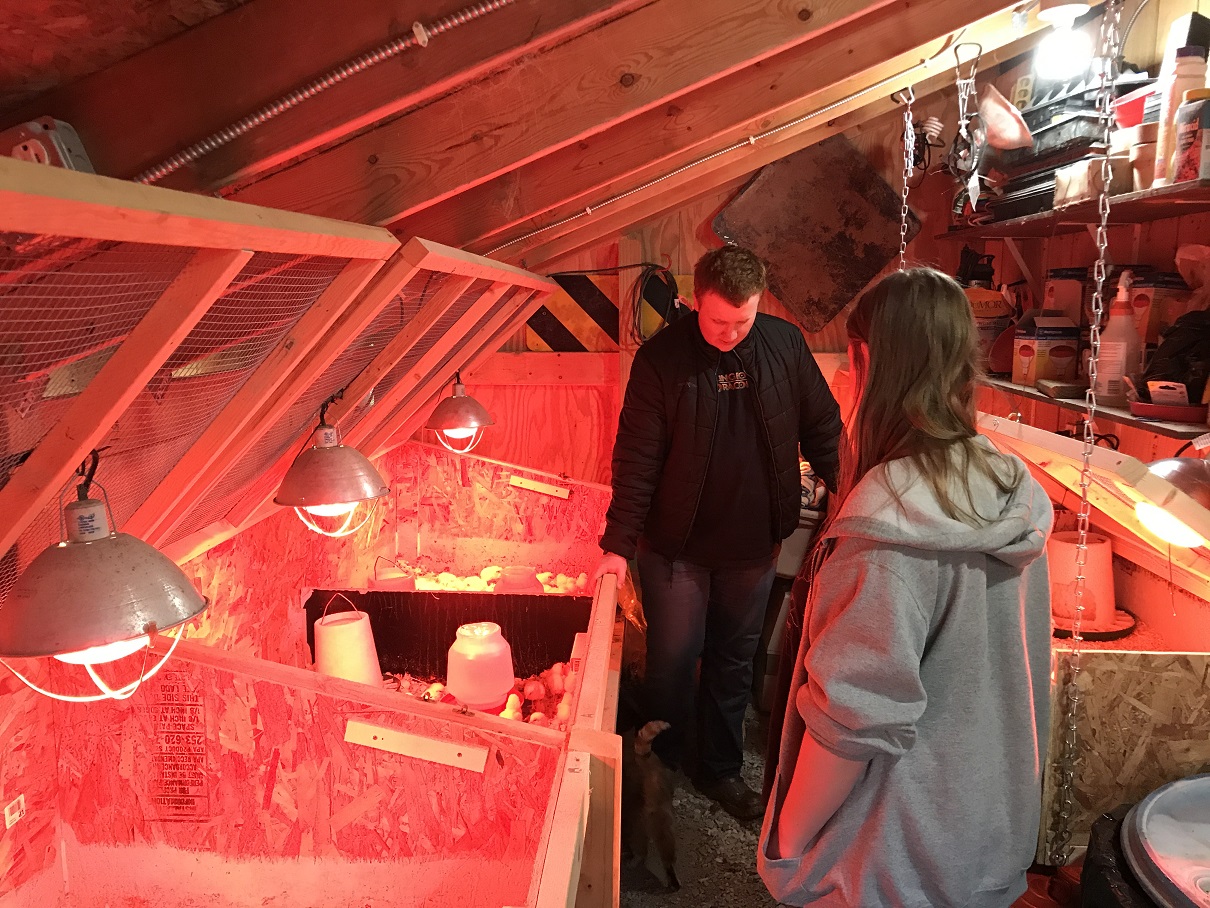
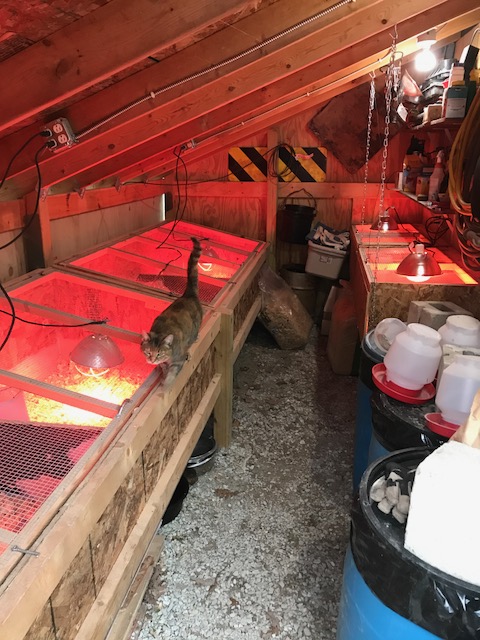
Even though this makes getting to the back corners of the two brooders in the back of the lean-to, I really prefer this brooder over the 2 hanging brooders.  It worked well this year.

Brothers M. Mondays in May 2022 – Brooder Series Week 4

Brothers M. Mondays is our way of sharing our excitement  about our chickens.

I decided we should have a dedicated brooder area so I cleared out my 8’x16′ lean-to and enclosed it. I lined one long wall with 2 3’x8′ brooder boxes.  The back is 3′ high and the front is 2′ high.  I chose 3′ wide to make it easy to reach the birds in the back; likewise, that’s why the front is shorter.  The back is higher so I can fit a 3gal waterer under the lid.  Additionally, I started out needing clearance for the lights which hung from the lid.

The lid is 2×2 frames with 1/4 hardware cloth, hinged in the back so it lifts up.  I use safety hooks to fasten it down so raccoons cannot unhook it.  I put additional eyehooks in the roof rafters so we can use the safety hooks to hold the lid up.

I switched the lights to sit on top the lid vs hanging because the chickens kept knocking the lights and they would fail; we lost several birds one night because of that.  So instead I sat the lights on top the lid, and attached the shroud to with pieces of wire.   I had to cut a hole in the lid to allow the lamp to protrude through since it sticks out further than the shroud.  This also comes in handy when I need to change a bulb.

Used pickle barrels line the opposing wall and make a safe place to store the feed. These brooders will hold 100 chicks each.

Brothers M. Mondays in May 2022 – Brooder Series Week 3

Brothers M. Mondays(on Tuesday this week) is our way of sharing our excitement  about our chickens.

Trailer1

We have a 3 1/2′ x 7′ wooden trailer, which became our next brooder.  I added a lid to it so we could use it to take the chickens to our processor.  It doubled as a pretty good brooder.  My biggest concern was that predators would breath through the lid, it’s made out of a 1×3 frame and 1/4 inch hardware cloth.  It’s pretty sturdy for travel when it’s locked down, but not really meant to keep something from chewing and pulling at the corners.

Trailer2Turns out I should have been more concerned about how secure the heat lamps were attached via the squeeze handle.  One fell off and burned a hole in the floor of the trailer.  Fortunately the conditions were right and it only smoldered a hold the size of a basketball instead of starting a fire.  Unfortunately I cannot find my picture of the hold.  After that I fastened the lights securely to the lid, which looked pretty ominous from outside the tent.

trailer3The down side of the trailer was running off an extension cord, how deep the trailer was for reaching onto it, and we outgrew it once we started raising more than 100 birds at a time.

Since I was worried about predators, I setup a trail-cam during one run.  Here’s a bonus video I made out of it, hope it makes up for the delayed post.

Brothers M. Mondays in May 2022 – Brooder Series Week 2

Brothers M. Mondays is our way of sharing our excitement  about our chickens.

Crate1Our very first brooder box was thrown together with a lamp and a plastic tote for 20 guinea fowl we bought.  But for the meat chickens, I needed something better and bigger.  I converted a pallet crate into a brooder.  I enclosed the crate on the outside with 2×4 wire fence to keep predators from breaking in.   I used some scrap composite wood flooring for the floor, I was a little short so there were a couple places I filled in with scrap wood. The crate didn’t have a top or lid, so I used a regular pallet with 2×4 fence attached for the top.  It wasn’t attached, but was heavy enough critters couldn’t move it.
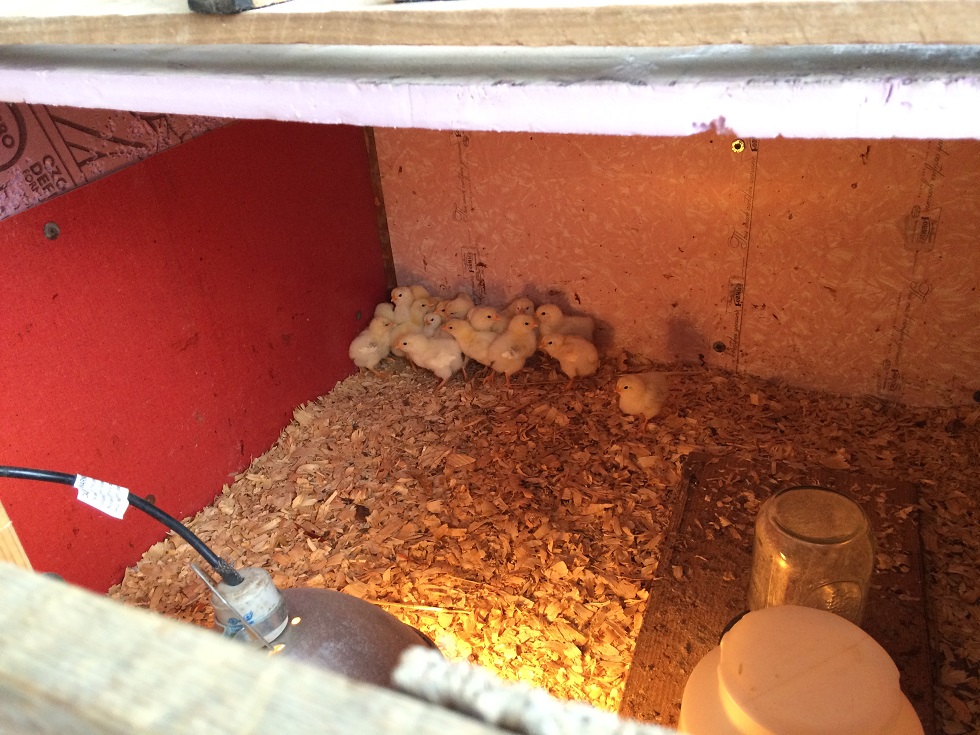
Crate2I lined the inside with pink 1/2″ foam board insulation.  On the sides I attached some scrap Formica sheets to protect the foam board from being pecked and eaten, it didn’t protect all the way to the top, but that was only a problem when I temporarily hosed a grown bird in the brooder.  I had a piece of foam board that covered almost the complete top, then I sat the pallet top/lid on to of that.
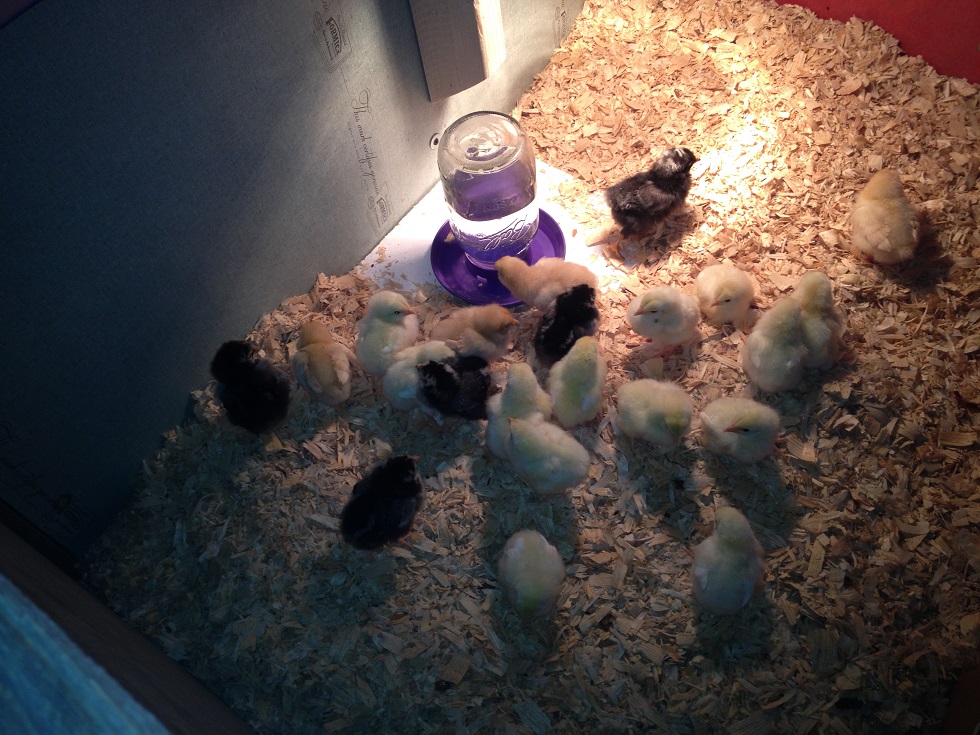
Crate3An attached light to the side and a waterer and feeder and it was ready for chickens.  This worked pretty good.  But we quickly outgrew it, I think the max was about 30-35 birds.
Brothers M. Mondays in May 2022 – Brooder Series Week 1

Brothers M. Mondays is our way of sharing our excitement  about our chickens.

I’ve recently received a couple questions about starting chicks, so this year for Brother M. Monday’s in May I’m doing a Brooder series

One of these things

Starting out, here’s some general brooder basics I use:

  • Length – In general, the chicks can leave the brooder as soon as they are feathered out.  Anecdotal wisdom is that the sooner the chicks eat pasture grass, the sooner they build immunities.

Starting in early spring, mine usually go out near the end of 3 weeks.  After that they start crowding the brooder.  When raising them in the summer, I like to get them out around the end of the 2nd week, assuming we’re having warm weather, during a cold spell, I’d still wait another week.

  • Heat – I subscribe to a “normalizing” heat method using heat lamps.  This means I supply the heat and rely on the chicks to self-regulate their temperature by moving closer if they’re cold and further away if they are hot.  This method means you have to be observant to what the chickens are doing.

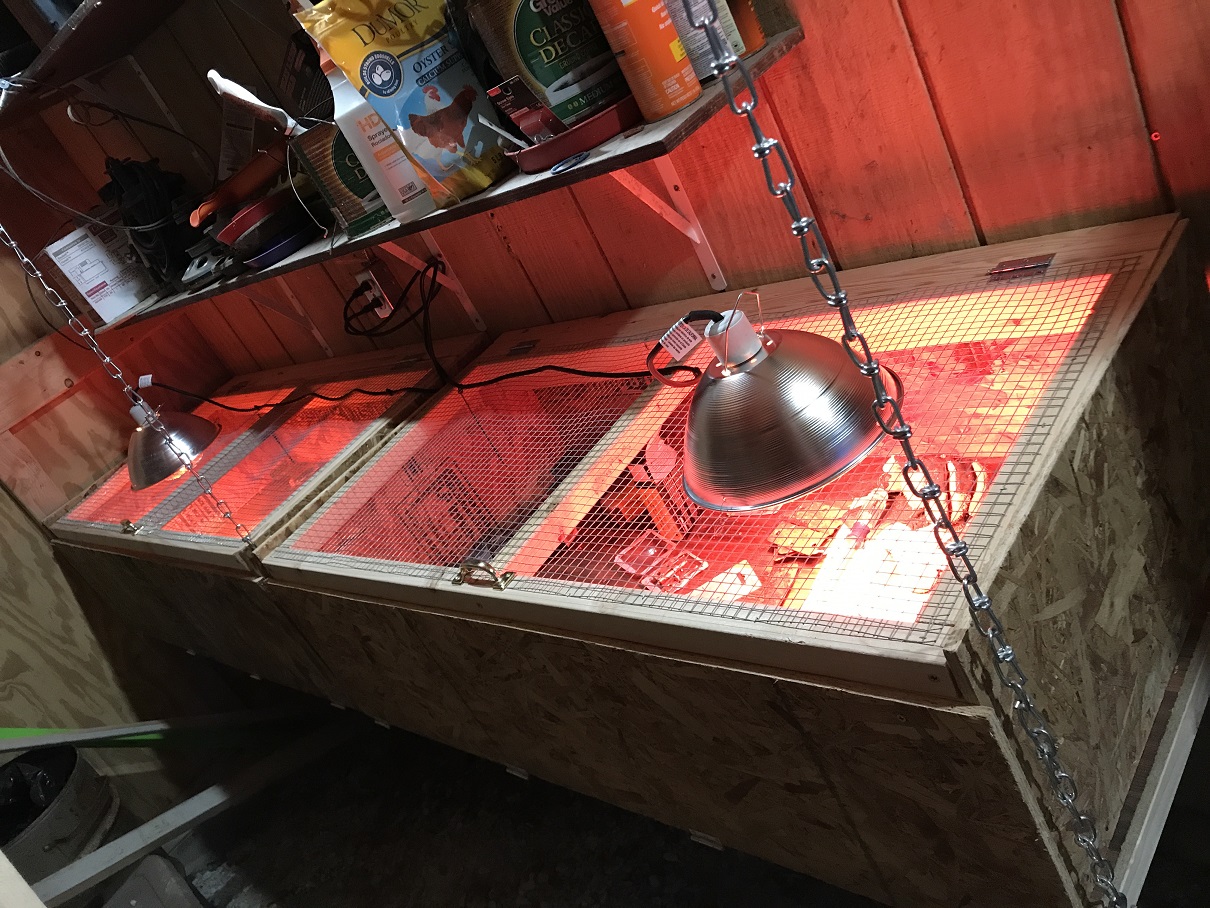
In the spring I use 250w bulbs and switch to 120w in the summer.  When the temperature drops low enough that the chickens are crowding the light, I use foam insulation and some blankets to cover the tops of the brooder, leaving appropriate space around the lights to prevent fire and allow air flow.

  • Bedding – I use the deep bedding method of bedding the chicks.  This means I layer in bedding as it gets soiled.  This method results in several inches of bedding, which gets sent to the compost pile when the chicks are done.

I use medium wood chips for bedding, don’t use cedar.  Fine chips will work, but you use a lot more in this method and there’s more dust which isn’t great for the chickens.

  • Water – I started out with plastic 1gal waterers, then switch to metal 3 gallon, well actually I started out with a couple quart waterers, but we outgrew them really quick.  I used the one gallon waterers because I initially sectioned off my big brooder into 4 sections and the 1gal worked well in that space.  I removed the dividers so I had 2 larger 3×8 brooders and switched to using the same 3gal metal waterers I use in the chicken tractor.

In the future I plan to switch to a nipple water system.

  • Feed – I started out with chick feeder troughs and quart feeders, but they didn’t hold enough food and were too cumbersome to keep up with.   I switched to using the same 7lb feeders that I hang in the chicken tractors, just sitting on the bedding.  I also set them on a piece of scrap deck board to help prevent wood chips from getting into them.
  • Space/segregation – I’ll mention the capacity of each brooder as I post them.  Initially I subscribed to more separation, 50 per brooder, but today feel that 100 per brooder works well.  The reason for separation is to prevent crowding, as chicks will trample each other.  However, my problem with separation is the lack of redundancy and the loss of brooder space for the equipment.

In my personal experience, with the brooder divided, I could only have one heat lamp per brooder.  When a bulb failed one night, I lost almost a dozen chicks due to cold and crowding for warmth.  After removing the divider,  there are two lamps offering redundancy in a failure, I experience a similar failure, but only lost a couple chickens due to the redundant light.  FYI, I think I got a bad batch of bulbs that year as I had several new bulbs fail.

Plus, using the one 3 Gallon waterer in the center instead of the two 1gal waterers gives the chicks more room.  It’s not necessarily about the actual space the waterer takes up, but the placement in the center.  In the divided brooder, the waterer always ended up near a corner which uses up more space.

I hope some of this info on how I do things is useful.  Stay tuned for the rest of the posts on the various brooders I’ve tried.

Portable Chicken Coop / Tractor – Lighting (revisited)

old lightI touched on the light for the Portable Chicken Coop in the Electronics post, which really was just putting my previous Supplemental Light setup in the new coop.  Given how quickly the battery can be drained in the short overcast days of winter, I wanted to revisit the lighting to see if I could improve the lighting, while reducing the wattage to extend the battery life.

The main goal of this redesign is to do away with the single 5w E26 LED Bulb (I bought a 2 pack, but only used 1) and reduce the wattage required for lighting.  To do this, I looked at these 1w G4 LED bulbs.  These have a clear glass, where the 5w bulb had a diffused plastic cover.  They are also a daylight bulb, where the 5w was warm light.  I expected both these factors to mean I could use less and get more or the same light.

PVC attemptI purchased a pack of G4 bases and started my build. I decided on doing a strip with 3 lights.  Hopefully I could pull one bulb out and get away with just 2 lights.  Either way, that would reduce my wattage from 5w to either 3w or 2w based on the number of bulbs.

My initial thought was to use PVC and run the wire inside the pipe and have the bulbs exposed on the outside.  It was tough getting the wires soldered and back through the small opening needed for the base of the bulb, but I did it.  However, after I drilled the holes for the screws and started attaching the base, I realized how fragile the porcelain bases were.

I broke the edges of the first base, but managed to get it secured.  When the 2nd base broke, I decided to rethink my design.  Obviously the flanged wood screws I was using would put pressure on the base promoting breaking, but I was being careful not to put too much pressure.  And all but one of the base breaks happened before I got the head down to the base.

For my redesign, I decided to use a strip of wood.  It’s more forgiving and would allow me to have open Installed led stripaccess to the wires on the back side for easy soldering and such.  One of the main issues with breaking the bases was that I struggled getting the right angle drilled for the screws on the round pipe.  A flat piece of wood should allow me better control on the angle.
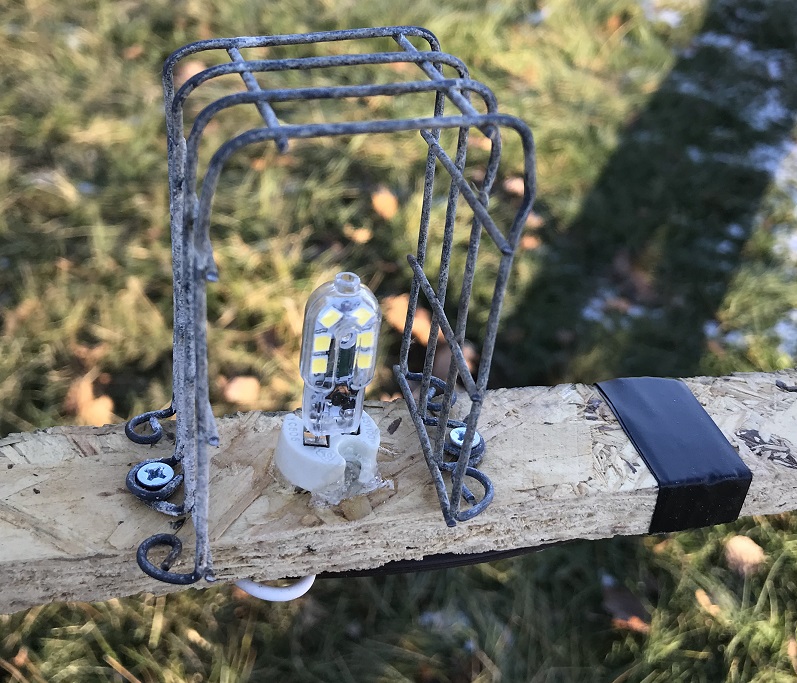
Looking around my basement, I found a scrap strip of OSB, apparently just waiting for me to make a light strip out of it.   I drilled the holes for the wires and was pleased that the bases went on much easier.  Still using wood screws, I had to be careful on how tight I tightened the screws, basically just lightly touching the base.

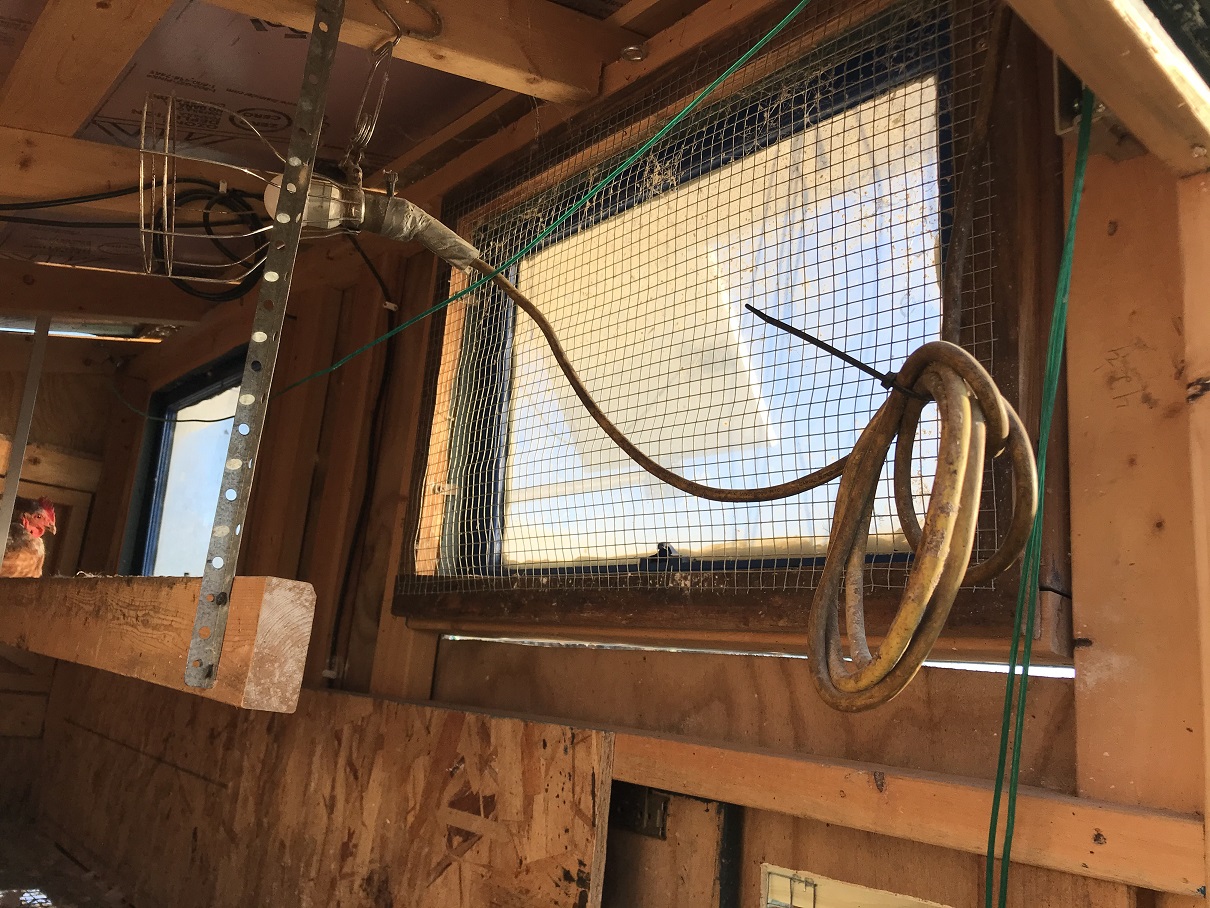
Light housingOriginally, I wasn’t planning on any protection for the lights, thinking the light was high enough on the ceiling that it wouldn’t get hit.  However, when I did a fit on the lights, the clearance really wasn’t’ that high, so I decided to make some protectors.   I had sections of 1/2 x 1inch chicken floor that I replaced with 1×1 wire.  I cut 3 pieces of this, curled the wire ends so I could attach it with screws and voilà protected lights.
Yes, you may notice the receptacle in the photo with the light strip.  I used an old electrical cord for the wiring, so I decided to add a household receptacle to plug it into so it’s easier to remove if I need to fix anything.  Also, I ended up using all 3 lights; the chickens seem to lay better that way.

I used this strip all winter and it was only in the late winter that I had any issues with having to swap batteries a couple of times to recharge them, which was a huge improvement.  I only have a 20w solar panel, so that upgrade is next on my list.

Back to Portable Chicken Coop Main Page

Portable Chicken Coop / Tractor – Feeders

This really doesn’t need to be a separate post, but I didn’t want to combine it with my solar tire tub post since I consider that a failure.

My father-in-law gave me these feeders, so I decided to use them in the initial phase of the coop build.  My thought was to build a PVC feeder system that we could add feed from outside the coop.  This was because roosters are mean to little girls.

Now, we no longer have a rooster and I’ve grown to like the door feeders.  Having to open the door to feed the chickens is a bit more work.  And a time or two a chicken has escaped, as referenced in my aviary post; however, at this point I’m no longer interested in perusing a PVC solution .

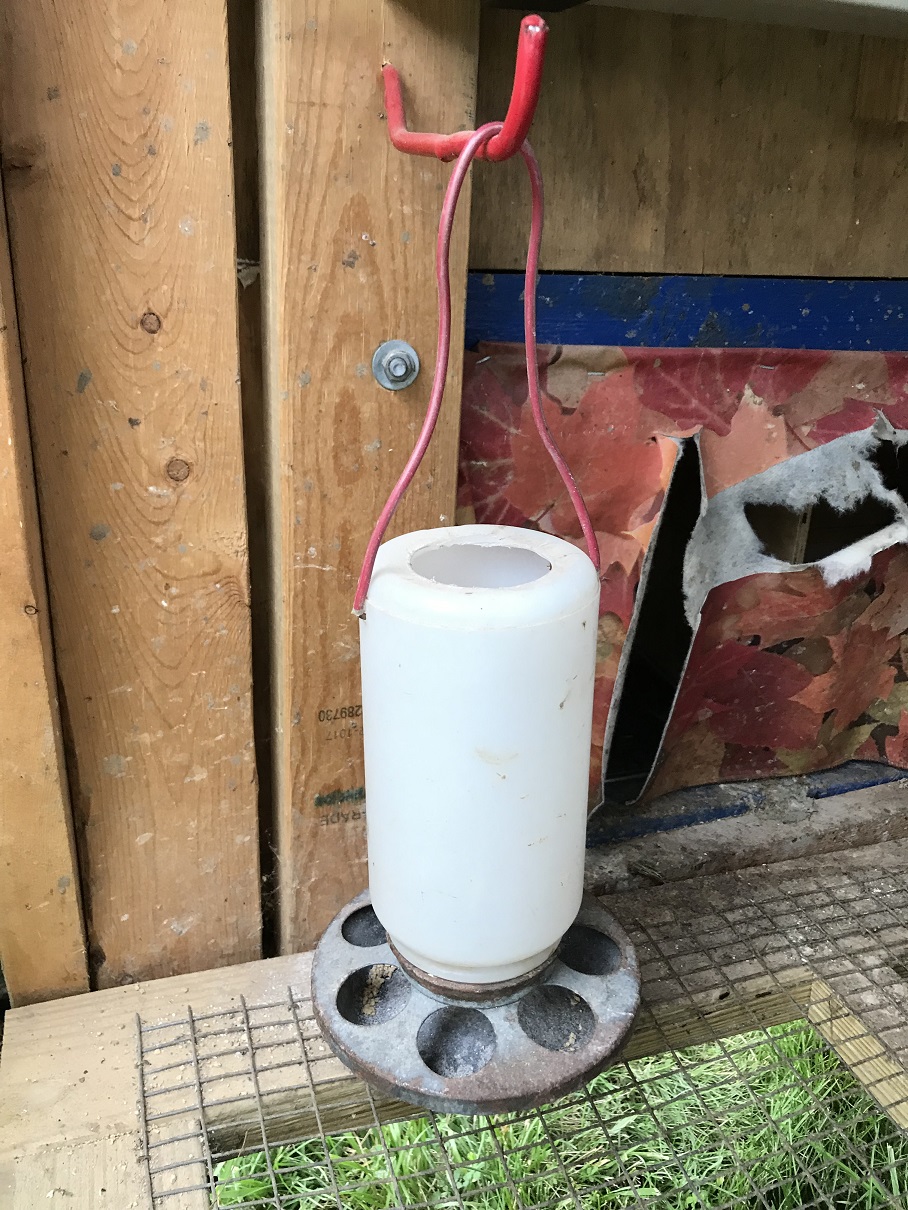
As a bonus item, here’s my solution for providing calcium for the chickens.  I like the idea of providing a second feeder that they can get the calcium at-will instead of adding it directly to their feed.  For this I repurposed a broken brooder waterer and an old brooder feeder base I picked up.  The plastic waterer was cracked and not holding water, so I cut open the top to be able to fill it from the top, and drilled two holds for the hanger.  A scrap piece of house wire inserted into two drilled holes acts as a hanger.

Back to Portable Chicken Coop Main Page