Dual-purpose Chickens 11 – Anti-pecking layer boxes

What to do when you have chicken(s) pecking eggs?  I’ve tried several things with minimal success including adding extra calcium to their diet, ceramic eggs in the box, and separating who I guessed the culprit(s) were. All of these had minimal success and required more resources.


Then I found these boxes. 

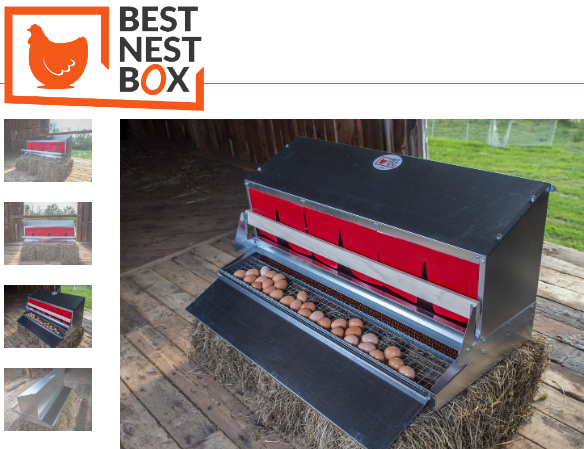
I really liked these boxes and there are many different DIY types/variations of the roll away nesting box.  The basic principal is that the egg rolls to an area that’s hard or impossible for the chickens to peck.  I looked at various DIY types and liked the paint tray version the best.  It’s easy to make, would fit into my existing boxes with minimal remodeling, and are easy to remove and spray out when they get dirty.

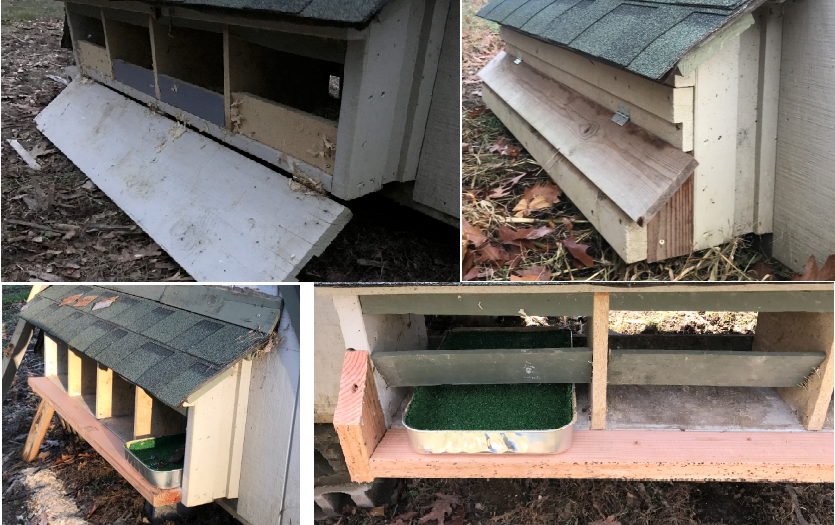
Making them wasn’t too hard.  I bought the largest paint try that would fit into my existing boxes.  Besides fitting, the 10.75×15.5 tray seems to be a good size in general.  I bought a strip of outdoor grass carpet, created a pattern with the first piece of carpet, and used it as my template for cutting the rest.  It may be overkill, but I used outdoor carpet glue to adhere the carpet to the tray.  I wanted something that would withstand a strong spray of water for cleaning.


Top left and clockwise: Old box with drop down lid, Finished box with lift lid, Added 2×4 and blocker boards with paint tray example, Side view added 2×4 with tray example.

The refit of the boxes on the A-frame worked out good.  The previous door to collect eggs worked fine, but I would have preferred to have a lid that lifted instead of a door that flops down.

The existing boxes were too short to fit the tray, but it was easy to add length to the outside which also created the protected area for the eggs.  A 2×4 length worked great and I cut the old door and used to fill in the new wall sections of the new enclosure.

I added the green blocker boards inside the boxes where at the start/end of the deep part of the try.  This is to prevent the chickens from being able to reach the eggs that roll down and collect in the bottom of the tray.

The refit also gave me the lifting lid I wanted.  In the pictures, I used a 1×6 I had laying around for the lid, but I intend on using a 1×8 to cover it better and give me an area to lock it down.


We’ve used these boxes for over 8 months and it’s great to see eggs under the lid.   They are peck free and much cleaner.  Our current layers are fickle and tend to lay in the corner of the coop instead of the boxes; however, we do get frequent eggs in the boxes too.  Our new ISA Brown flock is laying consistently in their temporary boxes.  I look forward to them using the roll away boxes.

Chicken Tractor – for layers and broilers

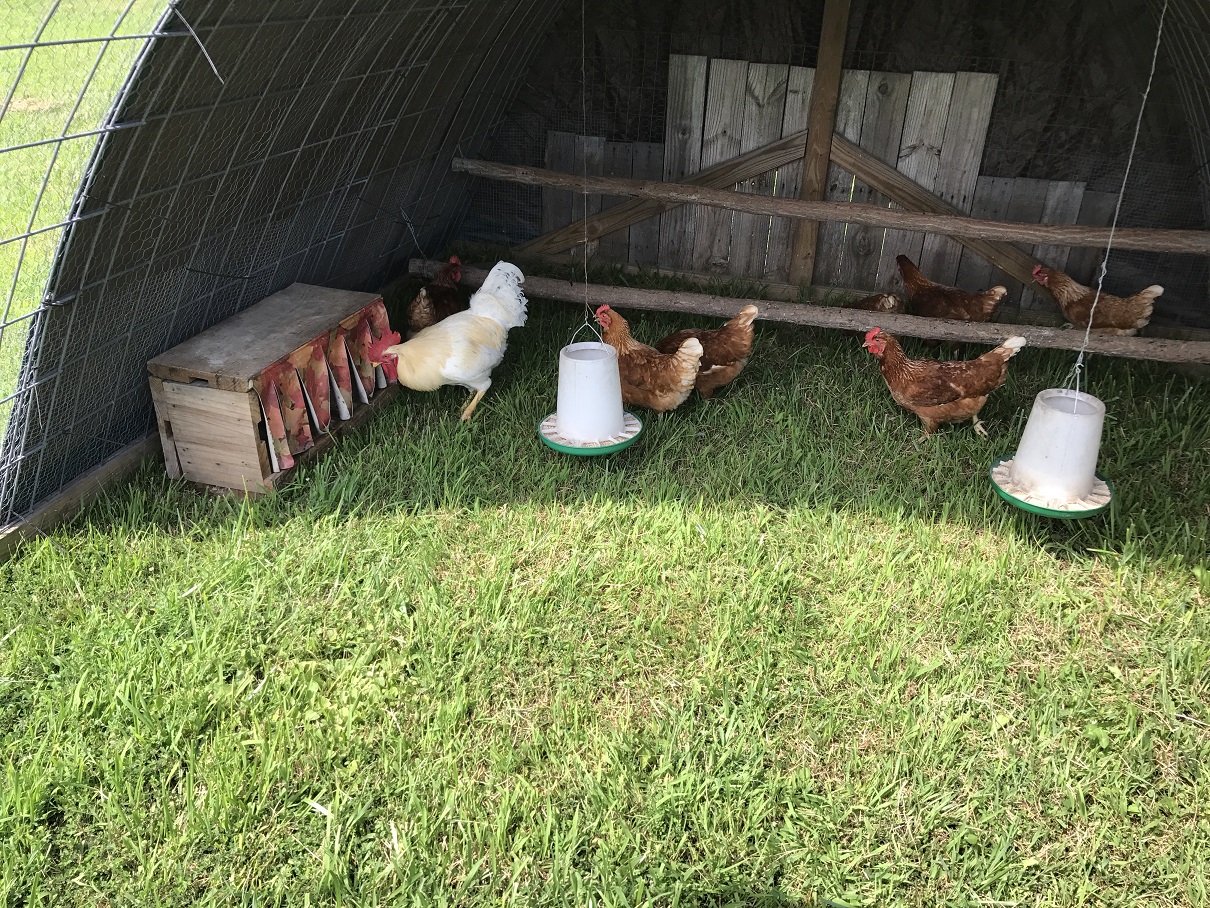
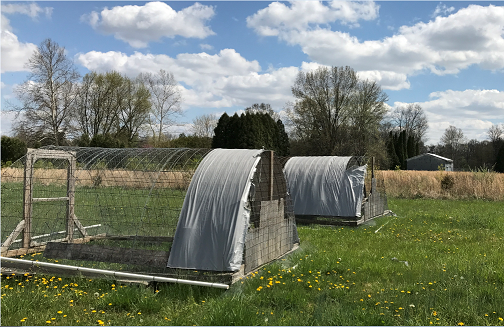
As I’ve mentioned in my Chicken Tractor Guide, you can use the chicken tractor design for layers.  So this summer and fall we’ve used our idle chicken tractors to house the new flock of layers while the old layers are in the A-frame coop and being phasing out.

Layer Boxes

Since this was temporary, I did not fasten the layer box to the back wall, but you could easily make a light weight set of 2-3 boxes to hang off the back wall.  Instead we used a double box I made out of scrap 2x wood for another project.  It’s heavy but works good.


Tractoring

Optimal moving depends on the stocking density.  For our 8 birds I’d say about every 3-5 days.  We’ve gone as longer during busy spells, leaving the ground looking like a post-apocalyptic movie scene.  I reconciled staying in one place so long with the fact that using good feed and the pasture has plenty of time to recover before next year.

Their foraging area is much smaller than the A-frame; however, that can be mitigated with more frequent moving.  Also, I’ve already experienced that this lighter breed can fly over the chicken wire fence we use for the A-frame.

A final note. This ISA Brown flock really dug into the soil much more than my previous breeds leaving many deep holes when we removed the tractor.  I say deep, but the deepest was about 4-5 inches.  They seem to digging shallower holes as time passed, which may be a factor of us moving them more frequently or just age.


Supplemental roofing for the tractor


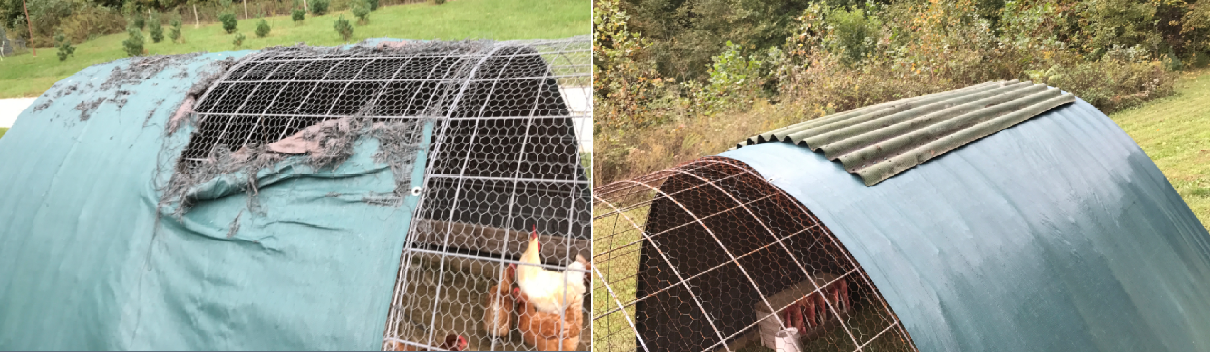
Since we have roosting poles already in our tractors, we only had one real issue, the tarps.  The tarps are medium duty and will typically last until the fall, sometimes longer, unless you have birds resting on them as we do.  Last year it was the crows that tore up the tarps.  This year it’s our flock of Guinea fowl.  Check out what a week of roosting can do to a tarp.


Fortunately I had an old piece of roofing laying around that I could attach to the top.  The boys just held some scrap pieces of wood on the inside of the coop that I fasten the roof to with screws.  This will protect the tarp and ensure a dry area underneath for the food dispensers.


Winter

October came and I decided not to move the chickens to the A-frame.  A chicken escaped the tractor during feeding and we caught her that night perched on the fence that keeps my Rainbow flock contained around the A-frame.  It’s really nice having them in the tractor, not needing to open and shut the coop each day and not worrying about them flying over the fence or aerial predation.

The cold of winter is my biggest concern.  I would want some better protection than the tarp and windbreak.  These are hearty birds and I’m think I could design a suitable shelter area in the tractor; however, snow is problematic for moving and requires some more thought.


The future of the layer flock

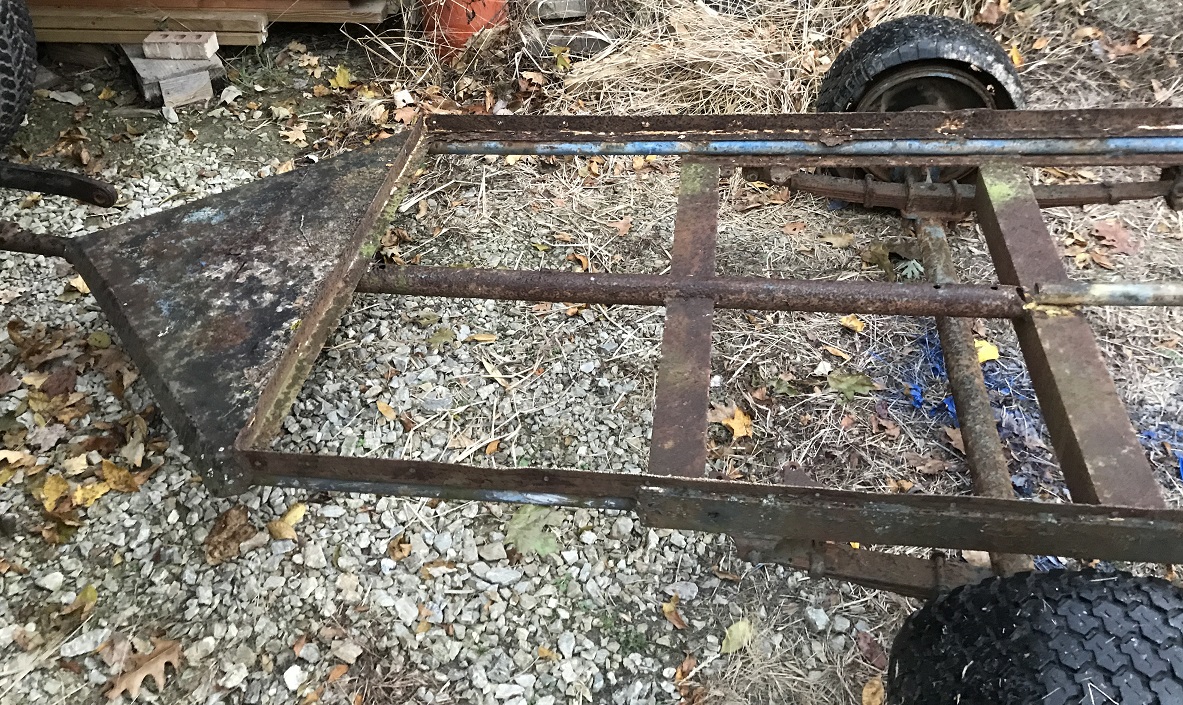
This experiment got me thinking about building a new chicken coup on a trailer frame and incorporating the best feathers of the A-frame, chicken tractor, and more.   Something very portable, versatile, and low maintenance.

Keep an eye out for the results of my new coop idea.  I’ll add a link to the new post here when it’s ready.  Until then, here’s a teaser.

Here’s the link.

-Jason

What to do with a whole chicken

“I don’t have time to roast a chicken.”

“I’ve never cut up a whole chicken.”

“What do you do with a whole chicken anyway?”

These are the comments I hear most when it comes to buying a whole chicken.  I’ve been making meals with whole chickens from our land for a few years now and this is what I’ve come to realize.  I don’t have time to roast a chicken either.  And knives, chickens, and myself should never be within proximity of each other at the same time.  HOWEVER, regarding the last question, I do know what I do with a whole chicken and thought I would share my no-time, no-fuss method of getting the max out of a chicken.  Grab a crock-pot, a few staple kitchen ingredients, and you are ready to go.

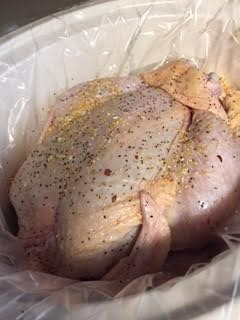
After thawing out the chicken in the fridge for a couple of days I place it in a crock-pot.  Sprinkle it generously with salt, pepper, and garlic.  You can add other seasoning if you want.  This is just my basic, take 5 minutes, and get the bird slow-cooking.  Cook on low for 6 – 8 hours or high 4 – 5 hours.  As with all food prep, times may vary depending on the size of your bird, crock-pot, etc.  Basic rule is an internal temp of 165 degrees and juices run clear.

Once the chicken is cooked I take it out of the crock-pot and let it cool down for 30 or so minutes.  When it is cooled down enough to handle without burning your finger tips, it’s time to pick apart the meat.  I’m sure there are plenty of YouTube videos that showcase the how-to’s and ways to pick apart a chicken efficiently.  Watch a couple, get the feel for it, wash your hands, and start pulling!  This process only takes a few minutes once you get the hang of it.

After the chicken meat is pulled off I cut it up and divide it into 2 cup quantities.   You now have the base for a multitude of recipes;  chicken salad, enchiladas, soups, casseroles, and the list goes on….

Now comes the next step.  What to do with the frame and chicken leftovers after pulling the meat  off?  Chicken stock, of course!

Using the same crock-pot (keep the juices from the chicken) return the chicken remnants.  At this time I add whatever vegetables I have on hand that don’t have much shelf life left.  Onions, garlic, carrots, celery, and bell peppers are my usual.  Sometimes all and sometimes none.  It’s not an exact science and you can wing it.  A splash of cider vinegar, a couple of bay leaves, add water to cover plus about an inch or two higher, and you are good to go.  Cook on low for 8 – 10 hours.  If life gets busy and you forget and it cooks longer, no biggie, the longer you cook it the more nutrients you will get from the bones.  Good stuff.   Once your stock is done, strain it through a cheese cloth and marvel at the nutritional liquid gold you have at your disposal.  Note:  Coloring will vary from a yellow to a darker brown and is dependent on time cooked and vegetables used.

The final step is to use and/or freeze your bounty.  I usually place everything in the fridge and use it, as needed, for a couple of days.  Then I divide out what I have left and freeze for future use.  For the chicken stock I pour into ice-cube trays, freeze, and pop them out.  Store them in a gallon zip lock bag and you now have grab and go chicken stock.  I use these for just about anything that requires water.  Rice, sautés, soups, etc.

And that, folks, is what I do with my whole chicken.

~ Tricia ~

Brothers M. Mondays – Family

Brothers M. Mondays – A new post each Monday until the 2018 market season starts on 5/26.

We are family.   Samantha fractured her ankle, but the chickens don’t care if you’re sick or hurt, they still need care multiple times a day.  So family kicks in.  Dad, Joseph and even a cousin or two have been helping Matthew while he’s the lone wolf.

Since Samantha couldn’t help, we put her to work taking some video.  And the youngest did her part by taking a few pictures and an unintentional  video of Sam and the boys with her new camera she got for her birthday.

Enjoy the video we’ve put together.


Brothers M. Mondays – Care of the Earth

Brothers M. Mondays – A new post each Monday until the 2018 market season starts on 5/26.

We recycle at our house and in the past have reused our plastic bags for Brothers M. Poultry.  With the increasing awareness of waste plastic polluting the environment, we’re switching to paper bags made from recycled material.  They look nice and are better for the environment.  Get one free with every chicken purchase.

Brothers M. Poultry – Out to Pasture

Brothers M. Mondays – A new post each Monday until the 2018 market season starts on 5/26.

Pasturing is an important part of producing such high quality, good tasking chicken.  We get them onto pasture as early is safe for the chickens to maximize their naturally grown experience. Enjoy the video of the kids moving the chickens from the brooder into the pasture.

Brothers M. Mondays – Tarps

Brothers M. Mondays – A new post each Monday until the 2018 market season starts on 5/26.

Each year the chicken tractor tarps need to be replaced.   These are an important part of the tractor providing shelter from rain and storms as well as shade. Therefore they need to be in good shape each year.


Brothers M. Mondays – New Sign painted by our artist

Brothers M. Mondays – A new post each Monday until the 2018 market season starts on 5/26.

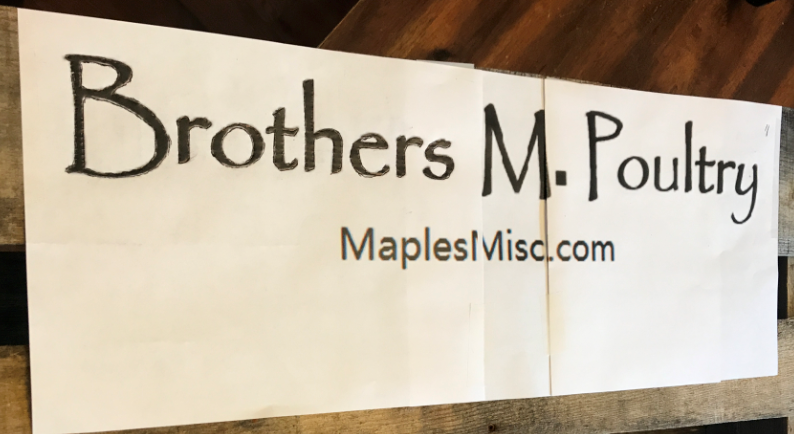
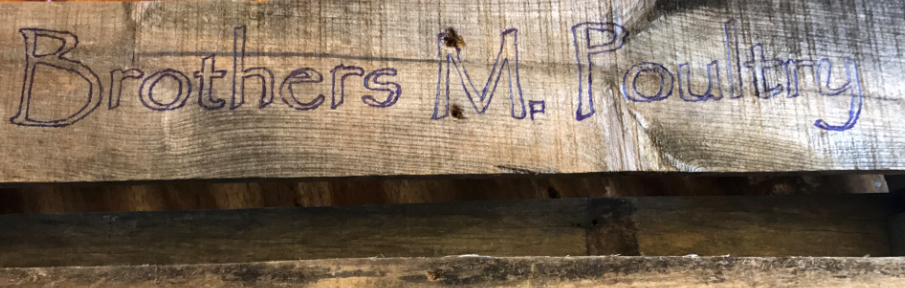
We needed new signs for the farmers markets.  Samantha offered her talents to help with the creation.  She likes painting and does a good job, so filling in the tracing lines was a snap for her.

The signs are made of recycled pallet wood.  They feature a rope handle and space in the middle to carry most of our farmers market materials.

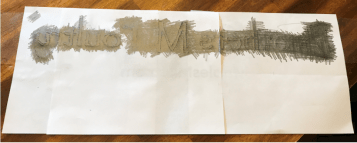
We used a home made carbon paper method to transfer the outline to the boards for painting.  Basically cover the back side with pencil graphite then traced real hard.


Don’t forget our CSA is still open, check it out.

Brothers M. Mondays – Chickens have arrived

Brothers M. Mondays – A new post each Monday until the 2018 market season starts on 5/26.

The chickens have arrived and are safe and sound in the brooders.  The newest partner did just fine handling and preparing for the chicks.

Check out our CSA after you enjoy the video.

Chicken Tractor Plans – Part 3

Last year I had to add detail to my parts list, which lead me to create the below outline and part list.  If you’re familiar with carpentry,  you should be able to take this blog and build a very sturdy and versatile chicken tractor.   Add this post to the basic diagrams in my earlier two posts, part 1 and part 2, and enjoy.

That’s not all.  This outline inspired me to write a 75+ page step by step how-to guide with illustrations, additional information, and personal experiences.  If you would like this detailed how-to guide, CLICK HERE.

As always, thank you for checking us out and all your support by liking and  sharing.


Supply List with  details.

Main Items

      • 3 – 16’x50” cattle/feedlot panels
        • Form the “hoop” structure Slightly overlapped
        • May want to cut one rung off end to shorten it so tarp can be stapled wood base easier.   Tarps come a little short because the measurements are raw not finished.
      • 5 – 2x4x12 treated
        • 2 – 12′ base sides
        • 2  – Cut 10′ base ends – 2′ extras become door diagonal supports
        • 1 – Cut 43″ for door frame top & cut 2 – 50″ sections  for back diagonals
      • 1 – 2x4x10
        • 1 – Cut 2 – 59″ door frame sides
      • 4 – 2x4x8 treated (3 if using 2×2 back upright)
        • 1 –  cut into 2′ lengths for corner braces for bottom frame
        • 2 – Rip in half to use for door
          • Or use 4 2x2x8 furring strips, but should stain them if not treated
          • Gives 4 2x2x8
            • 1 –  cut into 55″ and 31.5″ for side and top of door
            • 1 –  cut into 55″ and 31.5″ for side and bottom of door
            • 1 –  cut into 31.5 for middle brace on door
            • 1 – (optional) cut 61″ for back upright instead of using a 2×4
        • 1 – Cut 61″ for back upright
      • 75’ – 4’ Chicken wire
        • 50′ for 3 passes over the cattle pannels
        • 20′ for the ends
      • 50’ – 2′  hardware cloth, ¼” mesh
        • Perimeter of entire house.  Critter protection.
      • 20’ – 3’ 2×4 wire fence
        • Put over ends of coop for K-9 protection
      • 2 ½ – 3′ x  5-7′ scrap for back end weather board to give extra shelter
        • Should be fairly light
          • Thin pallet wood, what I used.
          • Sheet of tin roof
          • 1/4-1/2″ plywood or OSB
      • 12×16′ medium duty tarp, or heavy duty if you prefer.  Note the extra gets wrapped around the ends
      • 2 – 3” hinges
      • 2 – bolt latches
      • 1 – handle
      • 1 – large bag of zip ties. Used to fasten all the chicken wire, hardware cloth, fence, and cattle panels together.  So you want plenty.

Misc. Hardware

      • 2 – 3” hinges
      • 2 – bolt latches
      • 1 – handle
      • 24 – 3-3.5″ Lag screws. To assemble base, including corner supports
      • ~26 – 3″ deck screws.  To assemble door & frame and back upright and diagonals
      • 1/2-3/4″ Staples for staple gun
      • ~32 – 1 3/4″ Galvanized Fence staples.  To attach the cattle panels to the base and anchor the door and back upright.
      • Fasteners to attach the back weather break that won’t penetrate the 2×4 it’s going into.
        • 1 1/4 – 1 1/2 16GA staples (pneumatic stapler)
        • 1 1/2 – 1 3/4″ screw (Better than hand nails)
        • 3d-4d nail (d=penny)
      • 12’x16′ medium or heavy duty tarp.

Optional Apron

      • Ends
        • 25’ – 2′  ¼” hardware cloth
          • Will actually use approximately 12′, 1′ overlap on the ends.
        • 2 – 1 1/4″ x 10′ PVC pipe
        • For front and rear aprons
      • Sides
        • 25’ – 2′  ¼” hardware cloth (Can us e leftover from front and back apron if only 12′ was used for ends)
          • Will use approximately 13-14′.  Thirteen feet will give a 6″ overlap of the front and back apron while using just 1- 25′ roll of hardware cloth.
        • 3 – 1 1/4″ x 10′ PVC pipe
        • 2 – 1 1/4 PVC coupling


How I build the chicken tractors. 

    1. Start with the 10×12′ frame.  The 10′ end pieces should be raised about an inch to help pull the tractor over clumps of grass.
    1. Add diagonal corner braces.
    1. Hoop 3 sections of cattle panels.  They will overlap slightly. Nail them to the base and wire tie hoop sections together
    1. Assemble the door.
    1. Cut the door frame and attach to base and hoop with screws and fence nails.
    1. Cut and assemble the door.  I wait to attach it after I’ve stapled the chicken wire to the door.
    1. Put in rear vertical attaching the top to the hoop with fence nails.  Attach the diagonal supports.
      1. Add your end material for additional shelter.  Note: This side of the tractor will go to the most windward side, west for me.  The upper section is just covered by the tarp and can be raised for additional air flow. (don’t attach tarp yet)
    1. Cover the hoop with chicken wire, 3 passes of 4′.  Overlap slightly. Staple to wood frame and zip tie together and to the hoop.  I use a pneumatic staple gun with 5/8 staples, but a hand stapler should work fine, especially if you use a hammer afterwards to ensure they are tight.
      1. Note: If you don’t have a continuous 75′, such as two rolls of  50′ and 25′, plan it out first.  Cover the hoop, then back.  Save the front (door end) for last as it uses  3 smaller pieces.
    1. Cover the back and front sections and door with chicken wire.
      1. Note: the bottom 2′ will be hardware cloth and the upper section will be chicken wire.
        1. If you purchased 75′ you should be able to piece together the entire door and sides if you prefer.  I do the front and rear end across bottom with hardware cloth,  then the piece in the tops with the chicken wire.
    1. Surround the perimeter with 2′ hardware cloth.  I added this to stop predators from reaching in through the chicken wire and grabbing birds sleeping near the edge.
      1. Cover the back bottom 2′ that isn’t protected by your end material with  Hardware cloth.  Optionally you can cover the entire back for extra protection depending on what back end material you used.
      1. Start from the back and move to the front.
      1. Note:  If you don’t have 50′ continuous role, plan you’re cuts accordingly. IE, for 2 25′ roles, start in the back and wrap up to the door using one role for each side.  Then do the door.
    1. Add 2×4 fencing to ends.  This is added for K-9/coyote protection.  Three foot  doesn’t make it impossible for a K-9 to get over it, but that height with the chicken wire too makes for pretty good protection.  So far we’ve survived 2 K-9 attacks.
      1. Note:  Use a type/size predators cannot force through.  I use 2×4 3′ 14 gauge welded wire.
    1. Attach door with hinges and add latches and handle.
    1. Cover 2/3 of the hoop with the tarp, wrap extra around back.  Staple the tarp to the wood base and wire tie the eyelets to the hoop.
      1. Note:  My medium duty tarps last one season.  I remove and re-add each season.
    1. BONUS: Add an apron to the front and back for added protection.  You can also do the sides.
      1. Staple 12-14′ of 2′ hardware cloth to the front and back base, leaving 1-2′ of overlap past the tractor.  I try to leave it a little loose so it has a little “hinge” to it.   I don’t know that it’s required.
      1. Wire tie a PVC  pipe to opposite end of the hardware cloth for weight.
        1. Note:  If you cut the PVC end of the hardware cloth and bend the points down, it’s more of a deterrent for critters that might burrow under.

-Jason


Copyright © 2018 by Jason Maples